
In this article:
- Why These Garlic Butter Dinner Rolls Need No Yeast and No Rise
- Garlic Twice: In the Toss, Then Fresh Over the Hot Crust
- The Cast Iron Skillet Does the Shaping for You
- Ingredients for Garlic Butter Dinner Rolls
- Tossing and Baking the Garlic Butter Dinner Rolls
- Pale Bottoms, Leaking Butter and Bitter Garlic, Fixed
- Pizza Dough, Crescent Dough and a From Scratch Detour
- A Lighter Brush and a Dairy Free Skillet
- Assemble at Breakfast, Reheat While the Turkey Rests
- Warm Rolls, a Pat of Butter, Zero Survivors
- Garlic Butter Dinner Roll Questions, Answered
Why These Garlic Butter Dinner Rolls Need No Yeast and No Rise
Garlic butter dinner rolls usually ask for yeast, warm milk and at least an hour of rising, none of which fits between the turkey and the doorbell. This semi-homemade version starts from a tube of refrigerated biscuit dough and skips the wait entirely.
The leavening is already inside the dough, tested and measured by people whose whole job is consistent biscuits. Your only tasks are cutting, tossing in garlic butter and baking, which is exactly the division of labor a holiday cook needs.
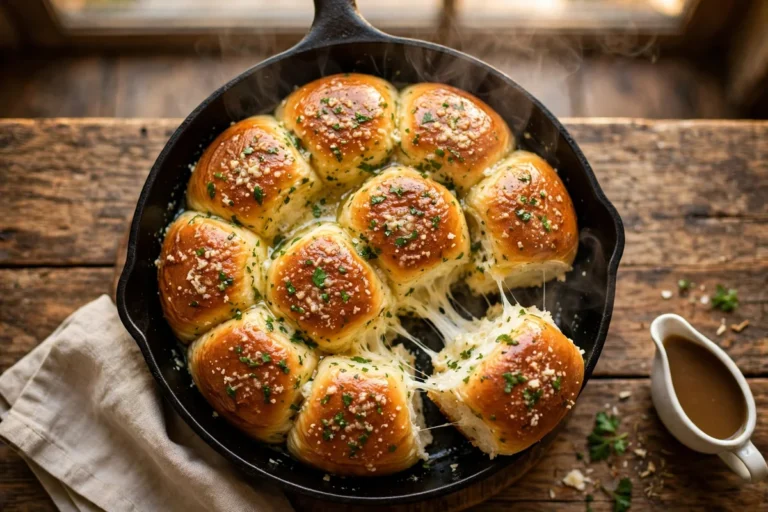
Baking the pieces snugly in a cast iron skillet does the shaping for free. The sides lean on each other, rise upward instead of outward, and come out as soft pull-aparts with crisp, buttery seams between every piece.
The garlic strategy matters as much as the dough. Half the garlic butter coats the raw pieces so the flavor bakes in, and the rest is brushed on hot, where fresh garlic stays bright instead of turning bitter in the oven.
Garlic butter dinner rolls are the dish my Thanksgiving table negotiates over, because a basket of twelve never survives to the second helping of turkey. Someone always takes two, and someone always notices.
These come out of the oven glossy and steaming, with seams that tear open in soft white strands. The crust carries parmesan freckles and parsley, and the bottom goes crisp where it met the hot iron.
They also free the real estate of your afternoon. While the rolls bake, the gravy simmers and the table gets set, and nobody has to guard a bowl of rising dough like a second turkey.
Garlic Twice: In the Toss, Then Fresh Over the Hot Crust
Fresh garlic burns fast at baking temperature, and burnt garlic reads bitter no matter how much butter surrounds it. Infusing the grated cloves into melted butter off the heat keeps the flavor round, sweet and unmistakably garlicky without a single scorched edge.
Garlic powder plays the supporting role in the toss. It coats every cut surface evenly, survives the oven without darkening, and gives the crumb itself a savory base note that fresh garlic alone cannot reach.
Parmesan is the quiet salt of this recipe. A quarter cup in the toss melts into the seams, and a final dusting over the hot rolls sets into crisp, salty freckles against the butter shine.
Parsley is not garnish here, it is contrast. Its fresh, green bite cuts through the richness exactly where the roll meets a plate of turkey, sweet potatoes and gravy, which is where these rolls do their best work.
Flaky salt goes on last, after the final brush, so the crystals stay intact on the crust. One pinch across the skillet gives every torn piece a tiny crunch of seasoning at the first bite.
The skillet lands on the table still whispering, butter bubbling quietly in the seams for the first minute. That sound, plus the smell of warm garlic, does the announcing before you ever say dinner is ready.
The Cast Iron Skillet Does the Shaping for You
Pull-apart bread forgives everything, because there is nothing to shape. Each biscuit becomes four rough pieces, each piece gets rolled between your palms for two seconds, and the skillet arranges the rest as they bake together.
The clock is honest: eight minutes of cutting, tossing and arranging while the oven heats, about sixteen minutes of baking, and a short rest while the final butter goes on. Thirty minutes, door to table.
Cast iron earns its place by browning the bottoms. A preheated skillet starts the crust the second the dough lands, so the undersides turn deep gold instead of steaming pale against a cold pan.
On a Thanksgiving menu, these rolls sit happily next to rich neighbors. Our 20-minute candied sweet potatoes bring the sweetness, the rolls bring the salt and garlic, and the plate balances itself without another side.
Oven timing is the other gift. The rolls bake at 375°F, the same temperature most holiday sides want, so the skillet slides in beside the casserole instead of demanding its own private oven slot.
Ingredients for Garlic Butter Dinner Rolls
- 1 can (16.3 oz) refrigerated flaky biscuit dough, 8 large biscuits
- 6 tablespoons butter, melted, divided
- 3 garlic cloves, finely grated
- 1 teaspoon Italian seasoning
- 1/2 teaspoon garlic powder
- 1/2 teaspoon fine sea salt
- 1/4 cup finely grated parmesan, divided
- 2 tablespoons chopped fresh parsley
- Flaky salt, for finishing
- 1 teaspoon olive oil, for the skillet
Buy the large flaky biscuits, not the small ten count tube. The layers in flaky dough are what open into those soft strands when the baked pieces are pulled apart at the table.
Tossing and Baking the Garlic Butter Dinner Rolls
Everything moves in one direction here: heat, melt, cut, toss, bake, brush. Read the steps once before you open the tube, because the dough is happiest when it goes straight from your hands into the hot oven.
- Heat the oven to 375°F. Rub a 10 inch cast iron skillet with the olive oil and set it in the oven while it heats, so the bottom of the rolls starts crisping on contact.
- Melt the butter in a small saucepan over low heat, take it off the burner, and stir in the grated garlic. Let it sit for 2 minutes; the garlic should smell sweet and warm, never sharp or browned.
- Open the biscuit tube and cut each biscuit into quarters. Roll each piece quickly between your palms into a rough ball, about 32 pieces in total, and drop them into a wide mixing bowl.
- Pour half the garlic butter over the dough pieces. Add the Italian seasoning, garlic powder, fine salt and half the parmesan, then toss with your hands until every piece is glossy and flecked.
- Pull the hot skillet out with a mitt and tip the dough pieces in, nudging them into one snug layer with a little breathing room between neighbors. They will expand into each other as they bake.
- Bake for 15 to 17 minutes, until the tops are deep golden, the exposed seams look set and dry, and the center pieces spring back when pressed gently with a fingertip.
- Brush the remaining garlic butter over the hot rolls, working it into the seams. Scatter the parsley, the rest of the parmesan and a pinch of flaky salt over the top.
- Rest the skillet for 5 minutes on a trivet. The rolls finish steaming in the middle, the butter settles into the crumb, and the pull-apart seams set cleanly.
- Serve straight from the skillet at the table, with a small spoon for the garlic butter that pools at the edges. Tearing, not slicing, is the whole point.

Pale Bottoms, Leaking Butter and Bitter Garlic, Fixed
Pale bottoms mean the skillet went in cold or the rolls baked on a low rack. Preheat the pan with the oven, bake on the middle rack, and give the rolls the full minute range before you call them done.
Butter pooling under the rolls instead of soaking in usually means the toss was skipped or rushed. Every piece needs its own glossy coat before it enters the pan, because dry seams bake up tough and shed their seasoning.
Bitter garlic has one cause: heat applied too long or too high. The cloves never cook in the oven on their own; they ride inside butter, go in grated fine, and the freshest garlic lands after baking, on the hot crust.
Doughy centers beside browned tops point to crowding or an oven running hot at the edges. Rotate the skillet once at the ten minute mark and check the center seam, which is the last place to finish.
If you trust tools more than fingertips, an instant read thermometer settles every argument. The center roll is done at 190°F, and the whole skillet carries over a few degrees while it rests.
Pizza Dough, Crescent Dough and a From Scratch Detour
Refrigerated pizza dough works as a straight swap. Cut the ball into 32 pieces, roll, toss and bake the same way, adding 2 or 3 minutes because the pieces start colder and denser than biscuit dough.
Crescent roll dough makes a richer, softer version. Unroll, cut each triangle in half, and expect a more delicate crumb that drinks even more garlic butter at the table. Nobody complains about this.
Cheese inside the seams is the variation my family requests most: tuck a pinch of shredded mozzarella between the pieces before baking. It melts into stretchy pockets that hold the pull-aparts together until the first tear.
And when the afternoon is truly yours, bake the yeasted version instead. Our 25-minute Thanksgiving dinner rolls are from scratch with rapid rise yeast, pillowy and plain buttered, the classic partner to these garlic loaded cousins.
A Lighter Brush and a Dairy Free Skillet
For a lighter basket, cut the butter to 4 tablespoons and make up the gloss with a tablespoon of warm milk brushed on at the end. The rolls stay tender, the garlic stays loud, and each serving drops noticeably.
Dairy free works without drama. Use a plant based butter that melts cleanly, skip the parmesan, and add a pinch of nutritional yeast to the toss if you like the savory echo it brings.
The rolls themselves stay vegetarian as written. That makes them the rare Thanksgiving side that every seat at the table can take without a substitution speech from the cook.
Assemble at Breakfast, Reheat While the Turkey Rests
The skillet can be assembled in the morning, covered and refrigerated for up to 8 hours. Bake it straight from the fridge while the turkey rests, adding 3 to 4 minutes, and brush with the garlic butter as usual.
Baked rolls keep 2 days at room temperature in a sealed bag, or a month in the freezer, wrapped in foil and bagged. Frozen rolls reheat in their foil at 325°F for about 12 minutes and come back steaming.
Leftovers next to a bowl of our 15-minute turkey gravy stop being leftovers. Tear, dip, repeat: it is the Friday lunch nobody writes a recipe for and everybody hopes happens.
Our numbers, per serving of two rolls: about 290 calories, 34 g carbohydrates, 3 g sugar, 15 g fat, 5 g protein and 720 mg sodium. For reference, USDA FoodData Central lists plain refrigerated biscuit dough near 210 calories per biscuit before the butter ever arrives.
Warm Rolls, a Pat of Butter, Zero Survivors
Garlic butter dinner rolls made this way ask for one tube, one skillet and half an hour, and they return a basket that perfumes the whole dining room before it lands. That trade is why they never miss a holiday at my table.
Double the batch in two skillets when the guest list grows. Keep the garlic fresh for the final brush, and put the skillet in the center of the table where it belongs.
Save one for yourself in the kitchen before you carry the rest out to the table. Cook’s tax, fully earned and never negotiable. Hanna
Garlic Butter Dinner Roll Questions, Answered
Can I make garlic butter dinner rolls with garlic powder only, no fresh garlic?
Yes, and the toss already uses garlic powder for exactly that reason. Raise it to 3/4 teaspoon in the toss and brush the finished rolls with plain herb butter. The flavor is warmer and less bright, but completely convincing.
My store only has the small 10 count biscuit tube. Will it work?
It works with a small adjustment. Cut each small biscuit in half instead of quarters, expect about 20 pieces, and check the skillet 2 minutes early. The rolls will be smaller, so a serving becomes three pieces instead of two.
What if I do not own a cast iron skillet?
Use a 9 inch round cake pan or a deep pie dish, and skip the preheating step so the pan does not warp. The bottoms will be a shade paler, but the pull-apart structure and the garlic butter finish are unchanged.
Can I assemble the skillet the night before Thanksgiving?
Assemble it in the morning rather than the night before; 8 hours covered in the fridge is the safe window. Overnight, the cut dough drinks the butter and the tops dry out. Bake from cold with 3 to 4 extra minutes.
Why are my rolls golden on top but doughy in the center seams?
The seams finish last, especially in a crowded skillet or a hot oven that browns early. Rotate the pan at 10 minutes, and judge doneness by the center seam: it should look matte and set, and spring back when pressed.
Garlic Butter Dinner Rolls
Garlic butter dinner rolls in 30 minutes, no yeast and no rise: refrigerated biscuit dough cut, tossed in garlic herb butter and baked pull-apart style in a cast iron skillet, then brushed again with fresh garlic butter, parmesan and parsley. The Thanksgiving side that never survives to seconds.
- Total Time: 30 minutes
- Yield: 12 pull-apart rolls 1x
Ingredients
- 1 can (16.3 oz) refrigerated flaky biscuit dough, 8 large biscuits
- 6 tablespoons butter, melted, divided
- 3 garlic cloves, finely grated
- 1 teaspoon Italian seasoning
- 1/2 teaspoon garlic powder
- 1/2 teaspoon fine sea salt
- 1/4 cup finely grated parmesan, divided
- 2 tablespoons chopped fresh parsley
- Flaky salt, for finishing
- 1 teaspoon olive oil, for the skillet
Instructions
- Heat the oven to 375°F. Rub a 10 inch cast iron skillet with the olive oil and set it in the oven while it heats, so the bottom of the rolls starts crisping on contact.
- Melt the butter in a small saucepan over low heat, take it off the burner, and stir in the grated garlic. Let it sit for 2 minutes; the garlic should smell sweet and warm, never sharp or browned.
- Open the biscuit tube and cut each biscuit into quarters. Roll each piece quickly between your palms into a rough ball, about 32 pieces in total, and drop them into a wide mixing bowl.
- Pour half the garlic butter over the dough pieces. Add the Italian seasoning, garlic powder, fine salt and half the parmesan, then toss with your hands until every piece is glossy and flecked.
- Pull the hot skillet out with a mitt and tip the dough pieces in, nudging them into one snug layer with a little breathing room between neighbors.
- Bake for 15 to 17 minutes, until the tops are deep golden, the exposed seams look set and dry, and the center pieces spring back when pressed gently.
- Brush the remaining garlic butter over the hot rolls, working it into the seams. Scatter the parsley, the rest of the parmesan and a pinch of flaky salt over the top.
- Rest the skillet for 5 minutes on a trivet so the rolls finish steaming in the middle and the pull-apart seams set cleanly.
- Serve straight from the skillet at the table, with a small spoon for the garlic butter that pools at the edges.
Notes
The double garlic butter is the recipe: half bakes into the seams for depth, half goes on hot so the fresh garlic stays bright. A cold skillet or a low rack gives pale bottoms; preheat the pan. The skillet can be assembled in the morning, covered and chilled up to 8 hours, then baked from cold with 3 to 4 extra minutes. Nutrition per serving of 2 rolls: about 290 calories, 34 g carbohydrates, 3 g sugar, 15 g fat, 5 g protein, 720 mg sodium.
- Prep Time: 8 minutes
- Cook Time: 16 minutes
- Category: Side Dishes
- Method: Baking
- Cuisine: American
1 commentaire sur « 30-Minute Garlic Butter Dinner Rolls (Soft, Pull-Apart and Golden) »