
In this article:
- Why Frozen Onions Win the Thanksgiving Clock
- The Dry Sear That Replaces Twenty Minutes of Waiting
- Ingredients for Balsamic Glazed Pearl Onions
- Searing, Simmering, and Glazing the Onions in One Pan
- Sweet First, Then the Vinegar Bite at the End
- When the Glaze Misbehaves: Thin, Sharp, or Scorched
- Peeling Fresh Pearl Onions in Sixty Seconds
- The Night Before Move That Saves Thanksgiving Day
- Little Pearls That Earn Their Place Beside the Turkey
- Balsamic Pearl Onion Questions, From the Pan
Why Frozen Onions Win the Thanksgiving Clock
Balsamic glazed pearl onions belong on the Thanksgiving table, but the classic versions ask for forty minutes and a bag of fresh onions that still need peeling. This one starts from frozen and finishes in twenty.
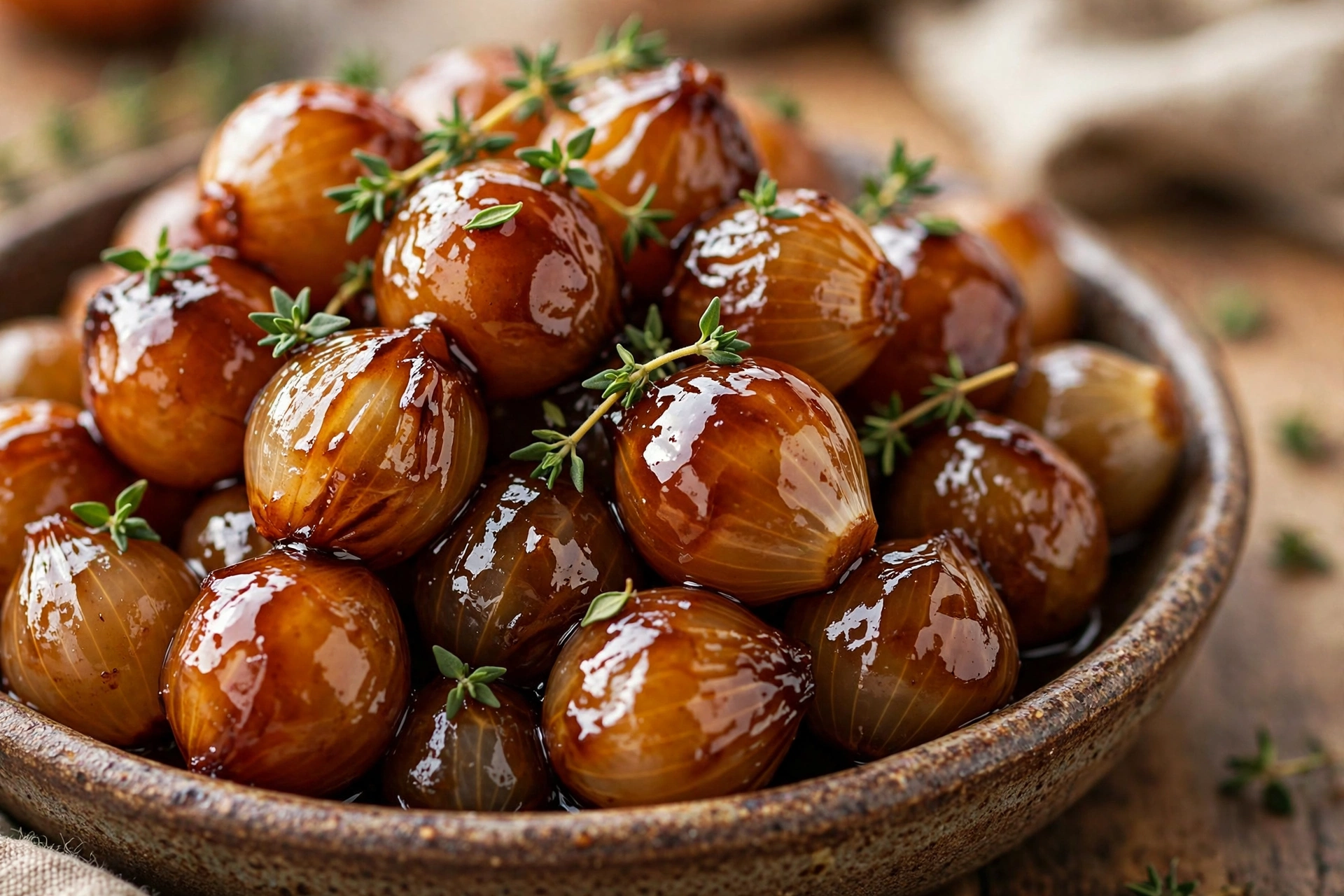
Frozen pearl onions arrive peeled, trimmed, and uniform. That uniformity is the whole advantage: every onion cooks at the same speed, so none stay crunchy while others collapse.
The method respects the clock by refusing to thaw. Frozen onions go straight into a hot, oiled pan, where their surface water steams off in minutes instead of pooling into a sad simmer.
Two bags give you roughly sixty onions, which sounds like a lot until they hit a holiday table. A serving is eight to ten pearls, and they shrink a little as the glaze concentrates around them.
There is also no knife work hiding in this recipe. No trimming, no peeling, no crying over a cutting board while the turkey timer runs. The bag opens, the pan heats, the dish begins.
From there the pan does everything. A hard sear for color, a short simmer in broth and balsamic, then a reduction that lacquers each onion until it shines like a marble.
Every Thanksgiving table has one dish that looks like it cost an hour and quietly cost almost nothing. These onions are that dish on my table, every single year.
The flavor is deep for something so small: sweet onion first, then a dark, tangy glaze, then the gentle bite of thyme at the end. They sit next to the turkey like they were always meant to be there.
They also fix a real problem with the Thanksgiving plate, which is that so much of it is soft and pale. A spoonful of glossy, bronzed onions gives the plate contrast and the gravy something to climb over.
Make them once and they join the permanent list, next to the 15-minute turkey gravy they were born to sit beside.
{image_1}The Dry Sear That Replaces Twenty Minutes of Waiting
Slow recipes earn their color with patience. This one earns it with heat and stillness, which is faster and, frankly, more reliable on a crowded holiday stove.
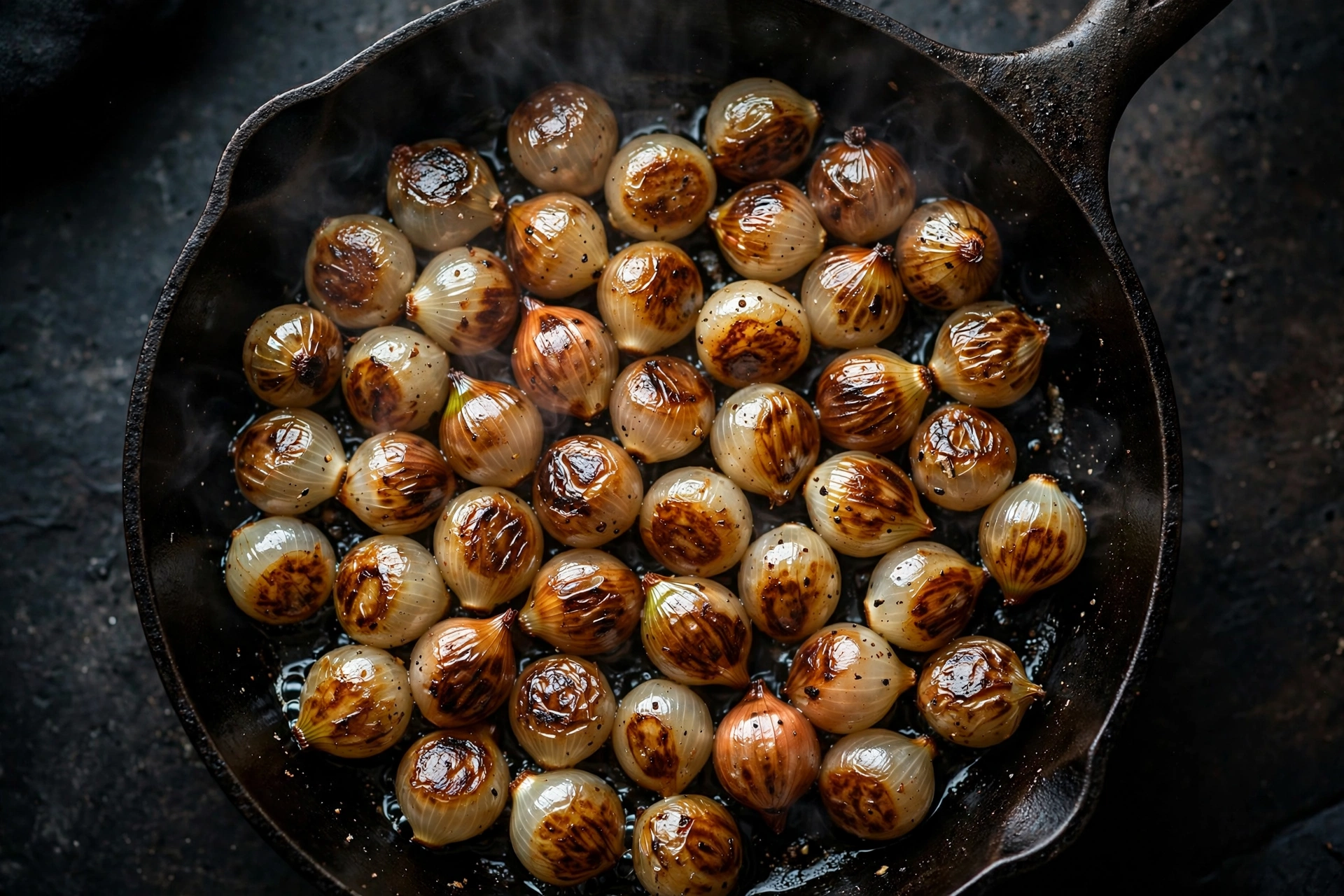
The onions land in the pan frozen and stay untouched for five full minutes. That stillness is where the browning happens; stirring early just moves cold onions around in their own steam.
As the water cooks off, the pan goes from steaming to sizzling. That sound change is your signal that the sear has started and the clock is now working for you.
One stir at the five minute mark, three more minutes of cooking, and the onions carry the deep golden patches that other recipes need a covered half hour to build.
It is the same principle behind our 15-minute garlic green beans: high heat, no fussing, and color that tastes like time.
Pan choice matters more than usual here. Cast iron holds the heat the frozen onions try to steal, and it forgives the full five minutes of stillness. A thin nonstick pan cools on contact and steams the onions instead, so if that is your pan, give the sear an extra minute and expect paler, still tasty results.
Ingredients for Balsamic Glazed Pearl Onions
- 2 bags (14 ounces each) frozen pearl onions, not thawed
- 1 tablespoon olive oil
- 2 tablespoons butter, divided
- 1/2 teaspoon fine sea salt
- 1/4 teaspoon black pepper
- 2 tablespoons brown sugar
- 1/3 cup balsamic vinegar
- 1/2 cup low sodium chicken or vegetable broth
- 1 teaspoon fresh thyme leaves, plus more to finish
Buy the onions peeled and frozen, in the bag, without apology. On Thanksgiving week, the twenty minutes saved at the sink are worth more than any badge of from scratch honor.
Searing, Simmering, and Glazing the Onions in One Pan
One pan, no transfers, no second pot to wash. The order below matters more than the ingredients do.
- Heat a large skillet over medium high heat. Add the olive oil and 1 tablespoon of the butter and let the butter foam.
- Add the frozen onions in a single layer, cut sides down where they have them. Do not stir for 5 minutes; let the water steam off and the bottoms bronze.
- Stir once and cook 3 minutes more, until most onions carry golden patches and the pan sounds like sizzling, not steaming.
- Sprinkle the brown sugar over the onions and stir for 1 minute, until it melts and starts to smell like caramel.
- Pour in the balsamic vinegar and the broth. It will bubble hard at first; that is the glaze being born.
- Simmer 5 to 6 minutes, stirring now and then, until the liquid reduces to a few glossy tablespoons that coat the onions in ribbons.
- Take the pan off the heat. Swirl in the remaining tablespoon of cold butter and the thyme, season with the salt and pepper, and rest 2 minutes so the glaze sets its shine.
- Spoon into a warm dish, scatter a few extra thyme leaves over the top, and serve while the glaze is still glossy.
Sweet First, Then the Vinegar Bite at the End
A pearl onion is mostly sugar waiting for heat. Cooked slowly in its own juices, it turns jammy and mild; seared hard, it picks up the roasted edges that make the dish taste grown up.
Balsamic brings the counterweight. Reduced in the pan, it loses its raw sharpness and turns syrupy, dark, and round, with the acidity arriving only at the very end of each bite.
Brown sugar is the bridge between the two. Two tablespoons is enough to help the glaze cling and shine without pushing a savory side dish into dessert territory.
The cold butter at the end is not decoration. Swirled off the heat, it emulsifies the glaze into something glossy and restaurant smooth, and it softens the vinegar’s last edge.
Thyme finishes the sentence. Its gentle, savory perfume is the reason these onions sit happily next to everything from turkey to our 20-minute cornbread sausage stuffing.
When the Glaze Misbehaves: Thin, Sharp, or Scorched
Thin glaze means the onions gave off more water than expected. Lift the onions out with a slotted spoon, boil the liquid alone for 1 minute, and pour it back over.
A sharp, vinegary bite means the reduction stopped early. Give it another minute of simmering; the harshness cooks off as the vinegar concentrates and sweetens.
Scorched sugar tastes bitter and looks black at the pan’s edges. It happens when the heat stays high after the sugar goes in, so drop to medium the moment the caramel smell appears.
A glaze that turns dull instead of glossy usually skipped the cold butter. Stir a teaspoon of cold butter into the warm onions and the shine comes back almost at once.
Graininess in the glaze means the sugar never fully dissolved before the liquid went in. Next time, let the sugar melt to a clear amber with the onions before the vinegar and broth arrive.
One more variable is the vinegar itself. A thin, harsh supermarket balsamic needs the full simmer to mellow, while a thicker, aged bottle reduces faster and can stop a minute early. Taste at minute four and judge from there.
Peeling Fresh Pearl Onions in Sixty Seconds
If fresh pearl onions are what you have, the peeling trick is simple and worth knowing. Boiling water is the whole secret, and it works on a full bag at once.
Drop the onions into boiling water for 60 seconds, drain, and run cold water over them. Trim the root end of each onion and squeeze gently; the onion pops out of its skin.
Peeled fresh onions join the recipe at step two, exactly like the frozen ones, but give them 2 extra minutes of simmering. Fresh onions are denser and need the head start.
Either way, the dish stays alcohol free and weeknight legal. Broth does the work that wine does in older versions, with none of the shopping or the leftovers.
The Night Before Move That Saves Thanksgiving Day
This side was designed to be made ahead, because Thanksgiving Day burners are contested ground. Cook the onions fully the night before, through the butter and thyme, and refrigerate them in their glaze.
Reheat gently in a skillet over low heat with a tablespoon of water, stirring until the glaze loosens and shines again, about 4 minutes. The onions taste, if anything, deeper the second day.
Stored in the fridge, they keep 4 days, which also makes them a quiet weapon for the leftovers that follow. A spoonful reheated over turkey and candied sweet potatoes is a new meal, not a rerun.
Per serving, the dish runs light for a holiday side: about 105 calories, 16 g carbohydrates, 11 g sugar, 4 g fat, 1 g protein, 1 g fiber, and 190 mg sodium, numbers in line with the onion data published at USDA FoodData Central.
Freezing the finished dish is possible but not my first choice; the glaze thins as the onions thaw and needs a fast re-reduction in a hot pan. The fridge route above keeps the texture exactly where it should be.
If your table eats early and your turkey eats late, hold the warmed onions in a low oven, covered, for up to 30 minutes. The glaze waits patiently as long as the heat stays gentle.
Doubling for a crowd is easy but has one rule: two pans, never one crowded pan. A single layer is what buys the sear, and the sear is what buys the flavor.
Little Pearls That Earn Their Place Beside the Turkey
Balsamic glazed pearl onions ask for one pan, twenty minutes, and a bag from the freezer, and they return the glossiest dish on the Thanksgiving table. That trade never stops feeling like a small victory.
Make them the day before, warm them while the turkey rests, and watch people ask which catering tray they came from. Nobody guesses the freezer bag.
Save the recipe for the holiday, then keep it for ordinary Tuesdays next to roast chicken. A fast side that behaves like a special occasion dish is exactly what this site is for. Hanna
Balsamic Pearl Onion Questions, From the Pan
Can I make balsamic glazed pearl onions a day ahead?
Yes, and the flavor deepens overnight. Cook them completely, refrigerate in their glaze, and reheat in a skillet over low heat with a tablespoon of water until the glaze turns glossy again, about 4 minutes.
Fresh or frozen pearl onions: which is better here?
Frozen, for this recipe. They come peeled and evenly sized, so they sear and glaze at the same speed. Fresh onions work too with the 60 second blanch and squeeze peeling trick, plus 2 extra minutes of simmering.
Can I use white balsamic vinegar instead?
Yes. White balsamic gives a lighter, golden glaze with a softer tang. Drop the brown sugar to 1 tablespoon so the dish stays balanced, and expect a prettier, paler finish.
Why did my glaze turn bitter?
The sugar scorched. Once the brown sugar goes in, the heat should drop to medium, and the vinegar and broth should follow within a minute. Bitter glaze cannot be fully rescued, but a knob of butter and a pinch of salt soften it.
How do I double the recipe for a big Thanksgiving table?
Use two skillets side by side, one full recipe in each. A single crowded pan steams the onions instead of searing them, and the glaze never reduces properly. Two pans keep the 20 minute promise intact.
Balsamic Glazed Pearl Onions
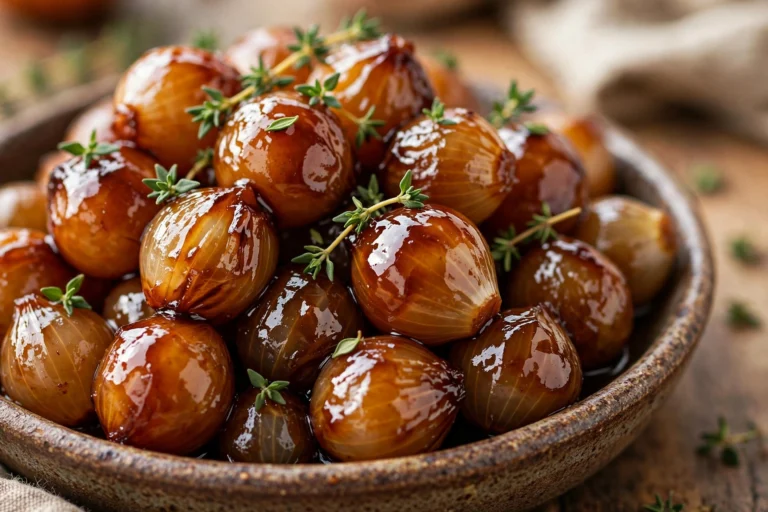
Balsamic glazed pearl onions in 20 minutes, starting from frozen so there is no peeling at all: a 5 minute undisturbed sear for deep color, a short broth and balsamic simmer, and a cold butter swirl that turns the reduction into a glossy holiday glaze.
- Total Time: 20 minutes
- Yield: 6 servings 1x
Ingredients
- 2 bags (14 ounces each) frozen pearl onions, not thawed
- 1 tablespoon olive oil
- 2 tablespoons butter, divided
- 1/2 teaspoon fine sea salt
- 1/4 teaspoon black pepper
- 2 tablespoons brown sugar
- 1/3 cup balsamic vinegar
- 1/2 cup low sodium chicken or vegetable broth
- 1 teaspoon fresh thyme leaves, plus more to finish
Instructions
- Heat a large skillet over medium high heat. Add the olive oil and 1 tablespoon of the butter and let the butter foam.
- Add the frozen onions in a single layer, cut sides down where they have them. Do not stir for 5 minutes; let the water steam off and the bottoms bronze.
- Stir once and cook 3 minutes more, until most onions carry golden patches and the pan sounds like sizzling, not steaming.
- Sprinkle the brown sugar over the onions and stir for 1 minute, until it melts and starts to smell like caramel.
- Pour in the balsamic vinegar and the broth. It will bubble hard at first; that is the glaze being born.
- Simmer 5 to 6 minutes, stirring now and then, until the liquid reduces to a few glossy tablespoons that coat the onions in ribbons.
- Take the pan off the heat. Swirl in the remaining tablespoon of cold butter and the thyme, season with the salt and pepper, and rest 2 minutes so the glaze sets its shine.
- Spoon into a warm dish, scatter a few extra thyme leaves over the top, and serve while the glaze is still glossy.
Notes
No wine anywhere: broth does the simmering work and the balsamic reduces to a true glaze. Make ahead friendly: cook fully the night before and reheat gently with a tablespoon of water. Nutrition per serving: about 105 calories, 16 g carbohydrates, 11 g sugar, 4 g fat, 1 g protein, 1 g fiber, 190 mg sodium.
- Prep Time: 5 minutes
- Cook Time: 15 minutes
- Category: Side Dishes
- Method: Stovetop
- Cuisine: American