
In this article:
- Why These Candied Sweet Potatoes Glaze Properly in 20 Minutes
- Caramel Edges, Citrus Light, a Satin Glaze
- One Skillet, Two Short Acts
- Ingredients for Candied Sweet Potatoes
- Steam First, Glaze Second: The Two-Act Method
- The Single Layer Rule and the One Centimeter Cut
- Fixes for Watery Glaze, Broken Rounds and Sugar Crystals
- Pecan Crunch, a Marshmallow Minute and a Lighter Glaze
- Making Them the Day Before Thanksgiving
- From Skillet to Table: Serving Notes
- The Side That Tastes Like It Took All Afternoon
- FAQ
Why These Candied Sweet Potatoes Glaze Properly in 20 Minutes
Candied sweet potatoes fail in two familiar ways: an hour and a half of patience, or a fast pan of pale slices floating in sweet water. This recipe refuses both by splitting the cooking into two short acts with different jobs.
Act one is steam. The rounds go into the bubbling glaze under a lid, where trapped steam cooks them tender in eight minutes without diluting anything, because the cooking liquid is the glaze itself.
Act two is reduction. The lid comes off, the water that the potatoes released cooks away, and the sauce tightens into a glossy coat that clings to each round instead of pooling under it.
Slice thickness is the third lever. At one centimeter, the rounds cook through during the steam, hold their shape when flipped, and offer two wide faces for the glaze to lacquer.
There is one more advantage nobody mentions: the pan is the serving dish. A cast iron skillet of glazed rounds goes straight to the table, holds its heat through second helpings and saves the cook a transfer that breaks slices.
The recipe also respects a small kitchen. Everything happens in one pan over one burner, the ingredient list fits in a single market bag, and nothing about the method asks for a stand mixer, a food processor or a specialty gadget.
Candied sweet potatoes are the dish my family argues about before the turkey is even carved, because the skillet never holds enough. Glossy orange rounds, edges darkened almost to caramel, sauce shining like lacquer: it looks like a special occasion production.
The flavor earns the argument. Brown sugar and maple bring the deep sweetness, orange juice and zest cut through it with light, and a measured half teaspoon of salt keeps every bite balanced instead of cloying.
It is also a forgiving dish to be proud of. No oven timing to negotiate, no casserole dish to grease, no marshmallow layer to babysit under a broiler while the turkey rests and the gravy waits for its final whisk.
Caramel Edges, Citrus Light, a Satin Glaze
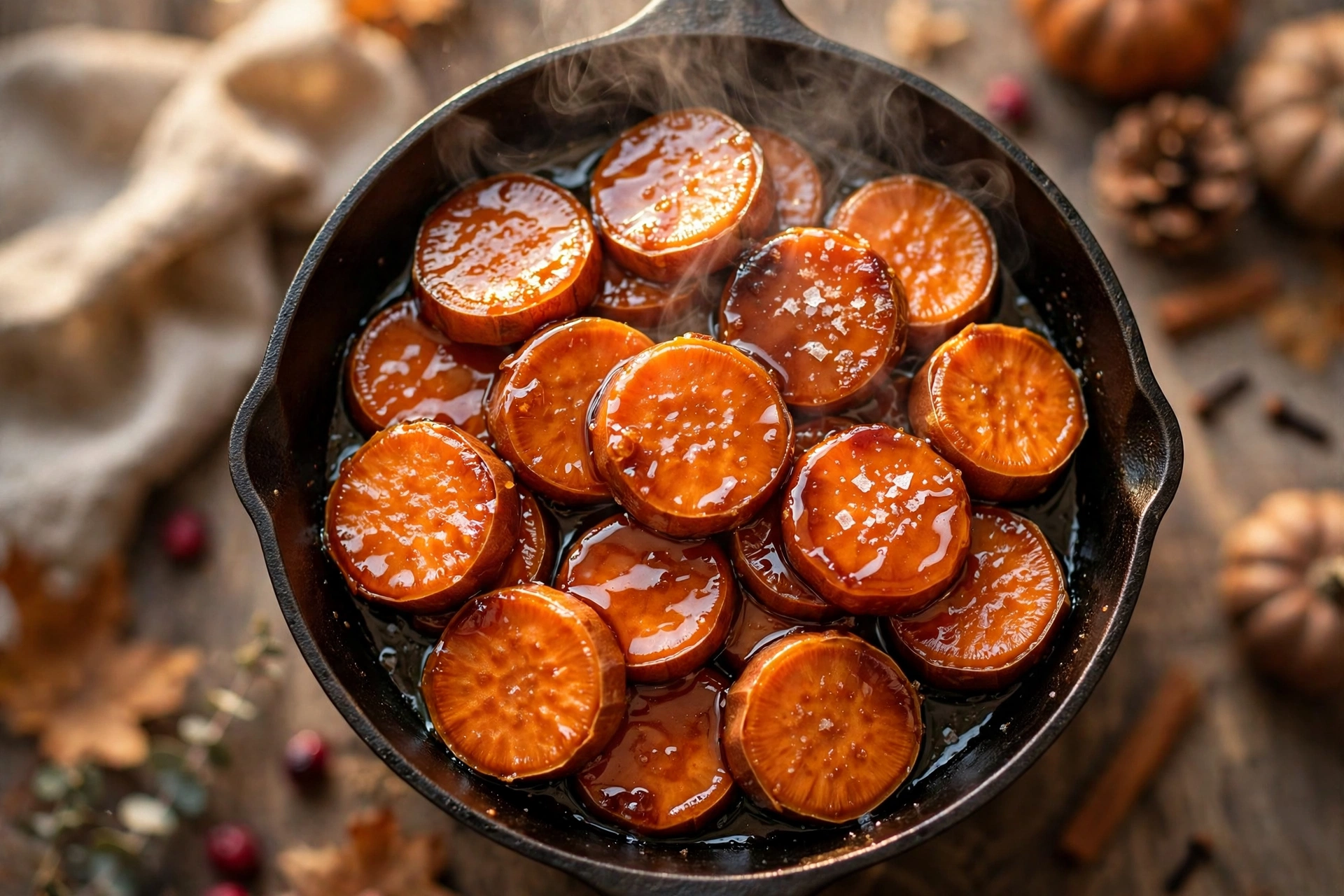
The first thing you notice is the shine. A properly reduced glaze turns each round into a small mirror, and the edges catch a darker caramel where the sugars met the hot pan.
Under the glaze, the potato itself stays silky and dense, never fluffy or stringy. Thin rounds cook evenly, so there is no chalky core hiding inside a soft rim.
Orange does quiet, essential work here. The juice loosens the glaze at the start so it can bubble evenly, and the zest leaves a bright top note that makes the maple taste more like itself.
Cinnamon and nutmeg stay in supporting roles, half measures that warm the background without turning the dish into a dessert spice blend. Vanilla, stirred in off the heat, rounds the finish.
On the Thanksgiving plate, this is the sweet note that makes the savory food taste better, especially next to a ladle of 15-minute turkey gravy and a scoop of something creamy.
Temperature plays a part in the pleasure. Served warm, the glaze flows just enough to gloss the plate; as it cools toward room temperature it sets into a soft candy shell that cracks pleasantly under the fork.
Left on the table for the grazing hour after dinner, the rounds keep their composure. The glaze protects the cut faces from drying, so the last slice eaten standing in the kitchen tastes nearly as good as the first.
One Skillet, Two Short Acts
Five minutes of peeling and slicing, fifteen minutes at the stove, twenty minutes total. The skillet never leaves the burner, the oven stays free for the turkey, and there is exactly one pan to wash.
The method also respects the rhythm of the big day. The steam act forgives a few distracted minutes, and the glaze act needs only occasional basting, so the cook can mash, whisk and carve in between.
If you are building the whole sides lineup on a clock, pair this pan with our 20-minute skillet creamed corn on the second burner and the stovetop carries half the menu by itself.
Sequencing is simple on the day itself. Start the skillet when the turkey comes out to rest; by the time the bird is carved and the gravy whisked, the glaze has reduced and the side is ready to travel.
Ingredients for Candied Sweet Potatoes
- 2 1/2 lb (1.1 kg) sweet potatoes, about 3 medium, peeled and cut into 1 cm (scant 1/2 inch) rounds
- 4 tablespoons (55 g) unsalted butter
- 1/2 cup (100 g) packed dark brown sugar
- 1/4 cup (60 ml) pure maple syrup
- 1/4 cup (60 ml) fresh orange juice
- 1 teaspoon finely grated orange zest
- 3/4 teaspoon ground cinnamon
- 1/4 teaspoon ground nutmeg
- 1/2 teaspoon fine sea salt
- 1 teaspoon pure vanilla extract
- Flaky sea salt, to finish (optional)
Choose firm, orange fleshed sweet potatoes of similar width, often sold as garnet or jewel, the varieties Harvard’s Nutrition Source praises for their beta carotene and fiber. Even widths mean even rounds, and even rounds mean one cooking time for the whole pan.
A word on the peel: it comes off for this dish. Peel carries a slight earthiness that fights the clean glaze, and the peeled faces absorb the sauce more evenly, which is what gives the finished rounds their uniform shine.
Steam First, Glaze Second: The Two-Act Method
- Melt the butter in a 12 inch skillet over medium heat. Stir in the brown sugar, maple syrup, orange juice, zest, cinnamon, nutmeg and salt, and simmer 1 minute until the glaze looks glossy and evenly bubbling.
- Add the sweet potato rounds in a single layer, slight overlap at the edges is fine. Spoon glaze over any exposed faces so every round starts coated.
- Cover the skillet and cook over medium-low heat for 8 minutes, until the rounds are just tender when pierced with the tip of a knife.
- Uncover and flip each round gently with tongs. Cook uncovered for 6 to 7 minutes, basting once or twice, until the glaze turns thick, shiny and slow to drip from a spoon.
- Take the skillet off the heat, stir in the vanilla and rest 2 minutes so the glaze sets onto the rounds. Finish with flaky salt if you like, and serve straight from the skillet.
Watch the glaze, not the clock, in the final minutes. It is done when a spoon dragged across the pan leaves a brief clean trail and the bubbles turn slow and thick, popping lazily instead of foaming.
The Single Layer Rule and the One Centimeter Cut
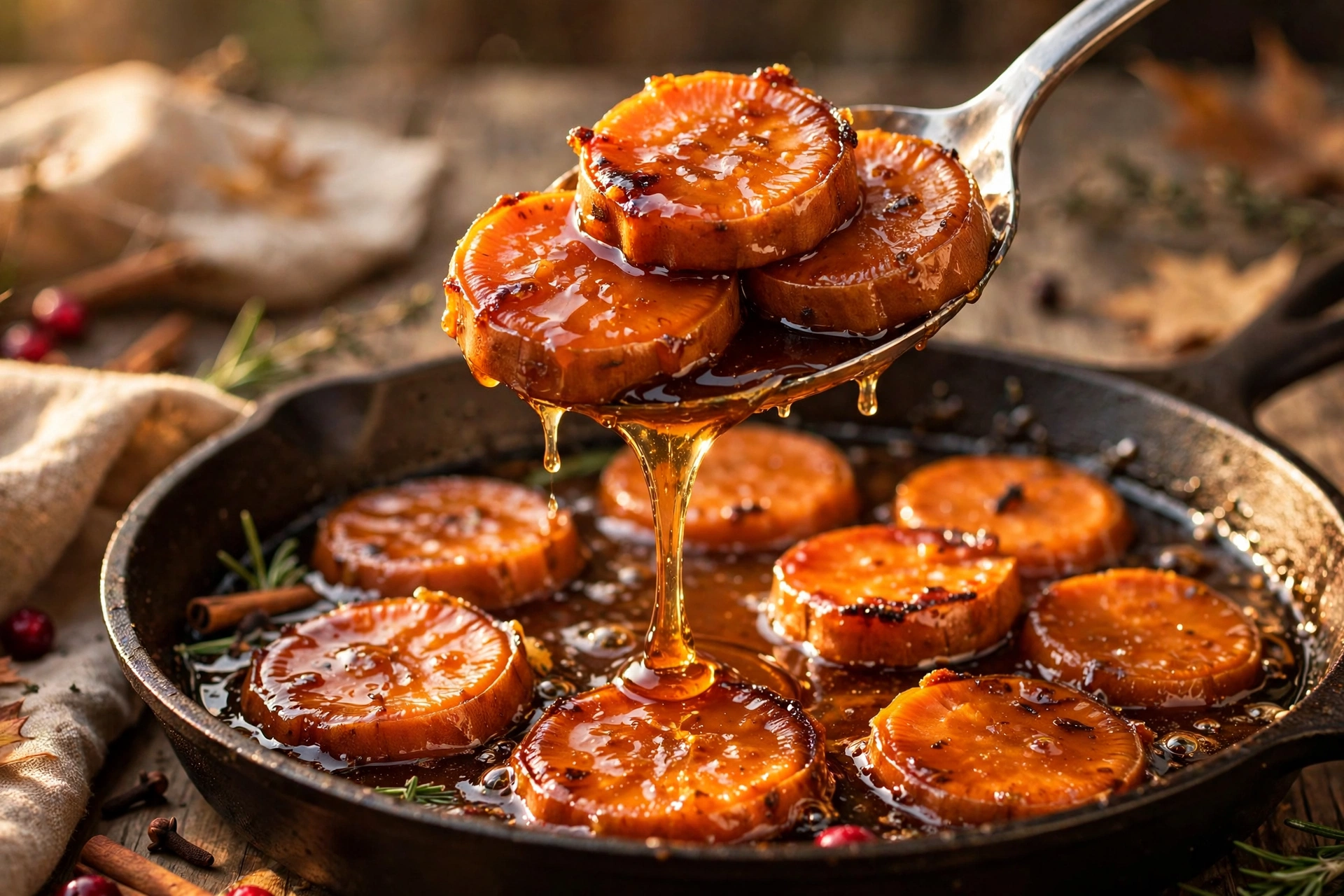
Every fast version of candied sweet potatoes quietly depends on geometry. Stacked rounds steam unevenly, shield each other from the glaze and break when you dig for the ones underneath, so the single layer is a rule, not a suggestion.
A 12 inch skillet holds about two and a half pounds of rounds in one layer. Cooking for a crowd, use two skillets side by side rather than one deep pile; the timing stays identical and both pans finish together.
The one centimeter cut is the partner rule. Thinner slices slump and tear when flipped; thicker ones need a longer steam that over-reduces the glaze before the centers soften. At one centimeter, tender and intact arrive at the same minute.
Rounds also beat cubes for a candied finish. Two broad flat faces give the glaze more surface to lacquer than small dice, which is why the plate looks glossy instead of merely sauced.
Cut the rounds straight from the cutting board into the pan in order, largest first at the center where the heat is strongest. That small habit evens out the cooking between thick middle slices and tapered end pieces.
Knife work is the only real labor, and it rewards a minute of care. A steady sawing motion with a sharp chef knife keeps the rounds clean edged; ragged cuts fray in the glaze and shed threads into the sauce.
Fixes for Watery Glaze, Broken Rounds and Sugar Crystals
A watery glaze at the end of act two needs two more uncovered minutes, nothing else. The potatoes release their own moisture under the lid, and the reduction simply has to finish its work.
Broken rounds come from stirring with a spoon. Flip with tongs, one round at a time, and slide rather than lift during the steam act. A round that does break still tastes perfect; serve it under the prettiest ones.
If the glaze turns grainy or crystallizes, the heat ran too high while the sugar dissolved. Next time, keep the first simmer gentle and let the sugar melt fully before the potatoes go in; a teaspoon of orange juice whisked in can rescue a borderline pan.
Glaze darkening too fast means the pan is crowded or the burner is strong. Drop the heat a notch and baste more often, moving the edge rounds toward the center where the bubbling is calmer.
Undercooked centers with a finished glaze are the last common snag. Return the lid for two extra minutes of steam, off the reduction clock, then uncover and baste; the glaze re-tightens almost immediately once the lid lifts.
Pecan Crunch, a Marshmallow Minute and a Lighter Glaze
For the pecan finish, scatter a third of a cup of chopped toasted pecans over the skillet in the last minute of glazing. The nuts stay crisp against the soft rounds, the way they do on our maple pecan mashed sweet potatoes.
The marshmallow minute is pure nostalgia: dot the finished skillet with a cup of mini marshmallows, cover for sixty seconds off the heat, and let the residual warmth slump them into soft white caps.
For a lighter glaze, cut the brown sugar to a third of a cup and lean on the maple and orange. The coat runs slightly thinner, the potato flavor steps forward, and the dish sits easier beside rich food.
A pinch of smoked paprika or chipotle powder in the glaze gives a gentle back heat that adults notice and children tolerate. Add it with the cinnamon so it blooms in the butter.
A teaspoon of maple extract whisked in with the vanilla deepens the woodsy note of the glaze. It reads as warmth and toasted sugar, keeps the dish exactly as family friendly as it started, and pairs quietly with the orange.
Making Them the Day Before Thanksgiving
Candied sweet potatoes may be the most make ahead friendly side on the table. Cooked a day early and reheated gently, the rounds absorb more glaze overnight and the flavor deepens rather than fades.
Cool the skillet, transfer everything to a covered container and refrigerate up to three days. Reheat in the same skillet over low heat with a spoonful of water, basting until the glaze shines again, about six minutes.
Freezing candied sweet potatoes is possible for a month, though the texture softens a notch after thawing. Freeze in the glaze, thaw overnight in the refrigerator, and reheat as above; serve them in a supporting role rather than as the centerpiece side.
Leftover candied sweet potatoes keep four days refrigerated and rarely survive two. Chopped cold rounds are excellent folded into a breakfast hash, and a warm spoonful over vanilla ice cream is a cook’s treat nobody needs to know about.
One storage caution: keep the container away from strong refrigerator neighbors like cut onion. The glaze is mostly sugar and butter, and it picks up stray aromas during a long rest more readily than the firm potato underneath.
From Skillet to Table: Serving Notes
Serve the candied sweet potatoes shingled rather than mounded, in the skillet or on a warmed platter, with the glaze spooned over at the last second. A warmed vessel matters: a cold platter thickens the glaze on contact and dulls the shine you built.
Portion planning is generous by design. Six servings assume a full Thanksgiving plate with competition; as one of only two sides, the same pan serves four, and doubling across two skillets is easier than stretching one crowded pan.
The Side That Tastes Like It Took All Afternoon
Candied sweet potatoes with a real lacquered glaze used to cost an afternoon; this two act skillet version costs twenty minutes and one pan. Steam under the lid, reduce in the open, and the rounds come out tender, glossy and balanced.
Set the skillet beside the Thanksgiving dinner rolls and watch which dish the table empties first. Around here, it is never the rolls.
Make it once on a quiet weeknight to learn the glaze by sight, and Thanksgiving day will feel rehearsed. Twenty minutes, one pan, and a side dish that behaves like you planned it for weeks. That is the quiet promise of these candied sweet potatoes.
FAQ
Should candied sweet potatoes be cut in rounds or cubes?
Rounds give the better candied finish. Two broad flat faces per slice take on more glaze than small cubes, and at 1 cm thick they cook through in the 8 minute steam without falling apart when flipped.
My skillet has no lid. Can I still make candied sweet potatoes this way?
Yes. A baking sheet or a large plate set over the skillet traps enough steam for act one. The seal matters less than keeping the rounds in a single layer so the steam reaches every slice evenly.
Can I make candied sweet potatoes the day before Thanksgiving?
They are ideal for it. Cook fully, refrigerate in their glaze up to 3 days, then reheat in a skillet over low heat with a spoonful of water, basting until glossy again, about 6 minutes.
Can I swap the maple syrup, or use less sugar overall?
Honey works by volume but tastes more floral; extra brown sugar is the neutral swap. For a lighter glaze, reduce the brown sugar to 1/3 cup and keep the maple and orange, accepting a slightly thinner coat.
Are the sweet potatoes at the store actually yams?
Almost always sweet potatoes. True yams are a different vegetable rarely sold in US supermarkets; the orange fleshed garnet and jewel varieties labeled either way are the right choice here, since sweet potatoes are naturally rich in beta carotene and fiber, as Harvard’s Nutrition Source notes (https://www.hsph.harvard.edu/nutritionsource/food-features/sweet-potatoes/).
Candied Sweet Potatoes
Candied sweet potatoes in 20 minutes in one skillet: one centimeter rounds steamed under a lid inside a maple, brown sugar and orange glaze, then uncovered so the glaze reduces into a shiny lacquer. Steam first, glaze second, never watery.
- Total Time: 20 minutes
- Yield: 6 servings 1x
Ingredients
- 2 1/2 lb (1.1 kg) sweet potatoes, about 3 medium, peeled and cut into 1 cm (scant 1/2 inch) rounds
- 4 tablespoons (55 g) unsalted butter
- 1/2 cup (100 g) packed dark brown sugar
- 1/4 cup (60 ml) pure maple syrup
- 1/4 cup (60 ml) fresh orange juice
- 1 teaspoon finely grated orange zest
- 3/4 teaspoon ground cinnamon
- 1/4 teaspoon ground nutmeg
- 1/2 teaspoon fine sea salt
- 1 teaspoon pure vanilla extract
- Flaky sea salt, to finish (optional)
Instructions
- Melt the butter in a 12 inch skillet over medium heat. Stir in the brown sugar, maple syrup, orange juice, zest, cinnamon, nutmeg and salt, and simmer 1 minute until glossy.
- Add the sweet potato rounds in a single layer, slight overlap at the edges is fine. Spoon glaze over any exposed faces.
- Cover and cook over medium-low heat for 8 minutes, until the rounds are just tender when pierced with the tip of a knife.
- Uncover and flip each round gently with tongs. Cook uncovered 6 to 7 minutes, basting once or twice, until the glaze is thick, shiny and slow to drip from a spoon.
- Take the skillet off the heat, stir in the vanilla and rest 2 minutes so the glaze sets onto the rounds. Finish with flaky salt if you like and serve straight from the skillet.
- Prep Time: 5 minutes
- Cook Time: 15 minutes
3 commentaires sur « 20-Minute Candied Sweet Potatoes: Skillet-Glazed, Never Watery »