
In this article:
- What happens to a cinnamon roll in a waffle iron
- Ingredients
- Pressing the waffles and whipping the glaze, step by step
- The sticking problem, solved before it starts
- A Christmas morning serving plan for eight
- Glaze swaps and toppings worth setting out
- Storing, freezing and reheating cinnamon roll waffles
- Questions I get about cinnamon roll waffles
What if the cinnamon rolls on Christmas morning came out with crisp edges, deep pockets for the glaze, and a swirl in every single bite?
That is what a waffle iron does to a can of cinnamon rolls. These cinnamon roll waffles press the dough into lacy, caramelized grids, and they do it in 20 minutes with a glaze you make yourself while the iron heats.
No rising, no rolling, no oven to babysit while the casseroles need it. Two cans of rolls, one hot iron, and a cream cheese glaze that tastes like the center of the roll, spread over everything.
It is the rare holiday recipe that gets easier as the morning gets busier. One person can run the iron in a corner of the counter while the rest of the kitchen does its loud, crowded work, and a warm waffle never waits more than three minutes for its eater. The iron, once hot, simply repeats its trick until the cans are empty.
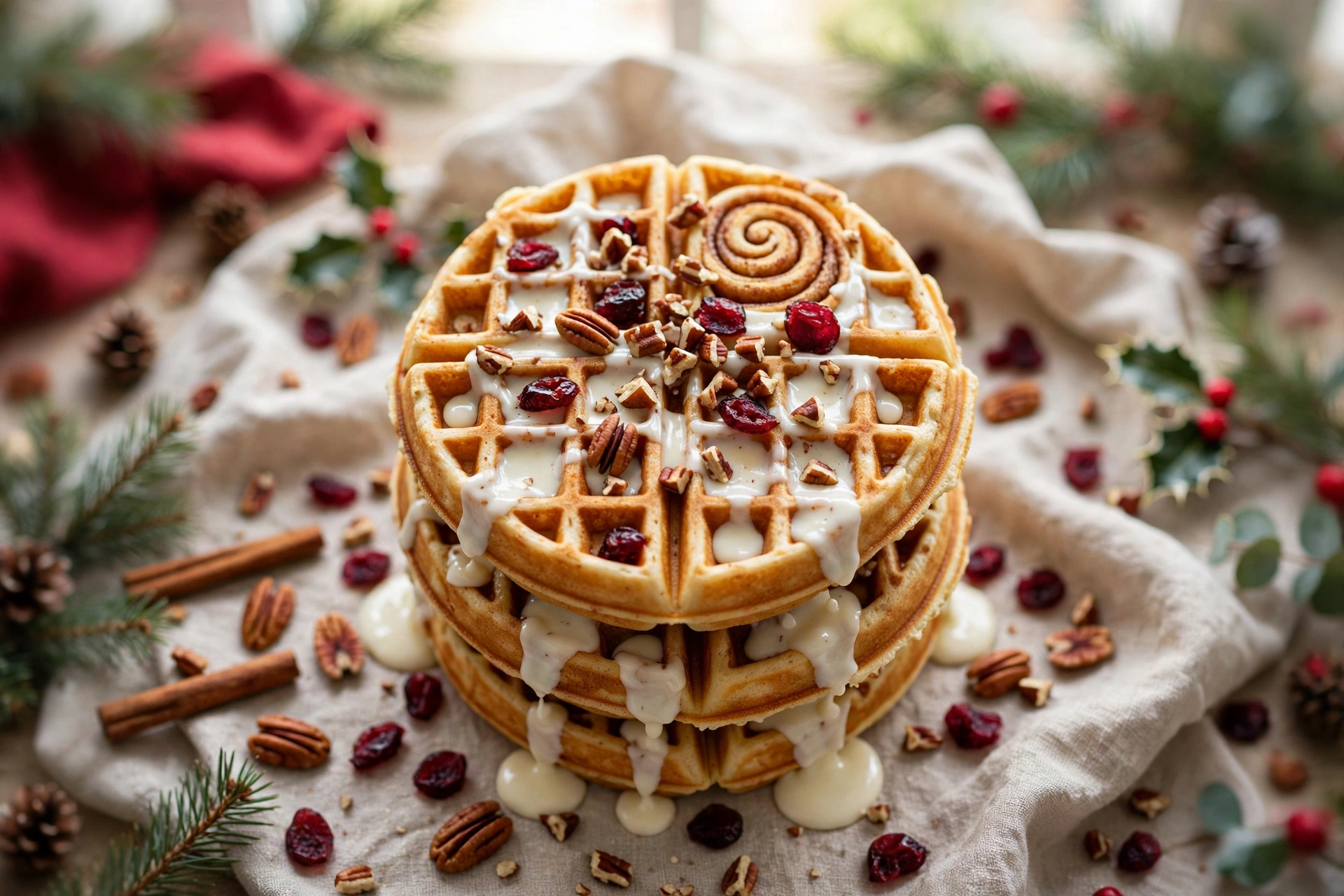
What Happens to a Cinnamon Roll in a Waffle Iron
A waffle iron cooks a cinnamon roll from both sides at once, under pressure, and that changes the pastry completely. The outside sets into a crisp, lacy shell while the cinnamon sugar inside melts into the grooves.
The spiral does something special under the lid. The layers of dough flatten and fuse into one waffle, but the cinnamon stripes stay visible, so every square tastes like a different part of the original roll.
Sugar is the reason for the crunch. The cinnamon filling caramelizes where it touches the hot plates, giving these cinnamon roll waffles the crackly edges an oven roll never develops.
The pockets are functional, not just pretty. Each little square catches a pool of glaze, so the ratio of icing to pastry is better than a frosted roll, where the top is sweet and the bottom is plain.
Size is the quiet advantage on a holiday morning. Two rolls pressed together make one generous waffle, and eight waffles from two cans feed a table without a third can or a second recipe.
Dough temperature decides how clean the press goes. Rolls straight from the fridge hold their spiral and release from the plates neatly; rolls that sat out while the coffee brewed go slack, spread thin and weld themselves to the grooves. Keep the second can in the fridge until the first one is pressed, and open it cold.
There is also a sound cue worth learning. A fresh waffle hisses steadily as its moisture escapes, and when the hissing fades to almost nothing, the crust has set and the waffle is ready to lift. Opening the lid too early, while the steam is still loud, tears the soft center; waiting for the quiet is the most reliable timer in this recipe.
Ingredients
- 2 cans refrigerated cinnamon rolls with icing, 12.4 ounces each, 16 rolls total
- Nonstick cooking spray, or 1 tablespoon melted butter, for the iron
- 4 ounces cream cheese, softened at room temperature
- 1 cup powdered sugar, sifted if lumpy
- 3 tablespoons milk, plus a little more as needed
- 1/2 teaspoon vanilla extract
- 1 pinch fine sea salt
- To serve, any of: chopped toasted pecans, dried cranberries, fresh orange zest, warm maple syrup
Pressing the Waffles and Whipping the Glaze, Step by Step
- Heat the waffle iron to medium high. Set the oven to 200°F and place a wire rack on a sheet pan inside it; this is the warm holding station for finished waffles.
- While the iron heats, beat the cream cheese in a medium bowl until completely smooth, about 1 minute by hand or with a mixer.
- Add the powdered sugar, milk, vanilla and salt, and beat until the glaze pours off the spoon in a ribbon. Add milk a teaspoon at a time if it sits in a mound; it should drizzle, not spread like frosting.
- Spray both plates of the hot iron generously. Place 2 cinnamon rolls side by side in each waffle section, close the lid, and press down gently for the first 10 seconds.
- Cook for 3 to 4 minutes, until the waffle is deep golden and crisp at the edges and steam has mostly stopped escaping.
- Lift the waffle out with a fork and a small spatula, never your fingers, and set it on the warm rack. Repeat, spraying the plates lightly before every batch, until all 16 rolls are pressed, 8 waffles in total.
- Let each waffle rest on the rack for 1 minute before glazing. That minute is what keeps the bottom crisp instead of steaming soft on a plate.
- Drizzle the cream cheese glaze over the warm waffles in ribbons, letting it pool in the pockets, and serve right away with the toppings in small bowls.
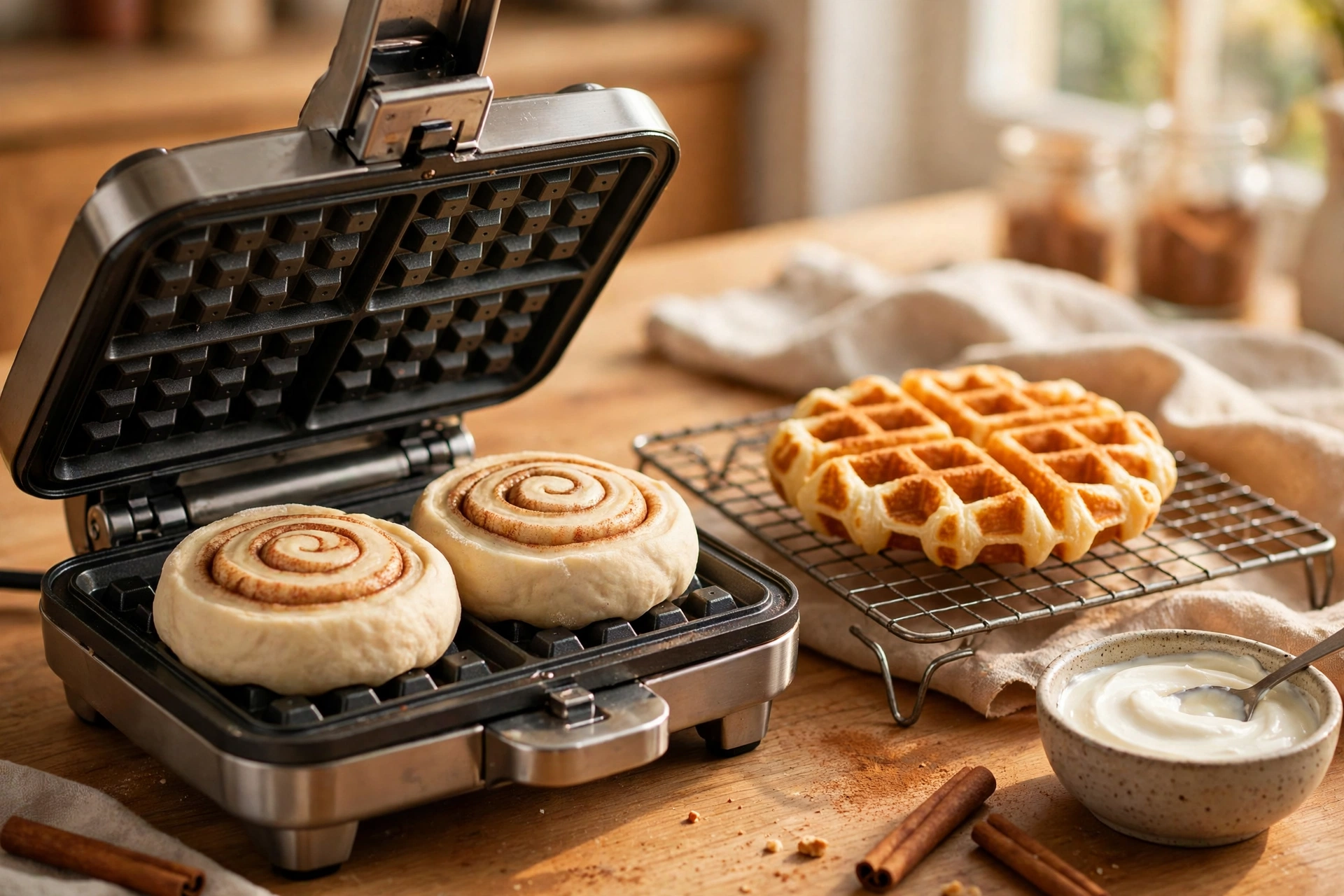
The Sticking Problem, Solved Before It Starts
Cinnamon sugar caramelizes, and caramelized sugar glues itself to waffle plates. The recipes that wave at a single spray at the start are setting you up for a torn third batch.
Grease twice: once at the start, then a light fresh spray before every batch. The plates cool slightly each time the lid opens, and each new spray resets the release layer where the sugar lands.
Press, do not clamp. Forcing the lid down hard squeezes dough into the hinges and makes the waffle thin and tough. Let the weight of the lid do the work after the first gentle press.
If a waffle does stick, do not pry at it hot. Turn the iron off, wait 2 minutes, and the cooling sugar releases its grip enough to lift the waffle in one piece. Then clean the plates warm with a damp cloth before the next round.
The one minute rack rest is the second half of the system. A waffle set straight onto a cold plate steams its own bottom and goes soft in the time it takes to press the next batch, which is how good waffles turn leathery before they reach the table.
One more habit separates a clean run from a sticky one: wipe the plates with a folded damp cloth between the last batch and serving, while they are still warm. Melted sugar wipes off in seconds at that point; left to cool, it hardens into the grooves and waits to grab the first waffle of your next session.
A Christmas Morning Serving Plan for Eight
The clock runs like this: iron heating and glaze mixing in the first 5 minutes, then four batches at roughly 3 minutes of cooking each, waffles holding warm on the rack as they finish. Twenty minutes after the first can pops, the whole table is served.
Sequence the rest of brunch around that. While the iron does its steady work, the Christmas morning cinnamon rolls can bake for the traditionalists, and nobody is waiting on anybody.
A toppings bar keeps the morning relaxed. Set out the pecans, cranberries and orange zest next to the glaze, plus warm maple syrup for the waffle purists who will absolutely appear.
Coffee logic matters too. These waffles are sweet and rich, so a pot of plain coffee or a pitcher of cold milk balances the plate better than another sweet drink. For a second flavor on the table, the eggnog pancakes use the same morning and a different pan.
If children are helping, this is their station. Pressing the lid, watching for the steam to slow, and lifting waffles to the rack is a job a careful ten year old can own, with an adult on glaze duty.
Doubling for a bigger house is arithmetic, not a new recipe: one can per four eaters, one extra batch per can, about four more minutes each. The glaze scales in the same bowl, and the holding rack in the warm oven fits two sheet pans before the waffles start crowding each other, which is the real ceiling of the plan.
Glaze Swaps and Toppings Worth Setting Out
The orange glaze swaps the milk for fresh orange juice and adds a teaspoon of orange zest. It cuts the richness and makes the waffles taste like December, especially with dried cranberries scattered over the top.
The maple version replaces 2 tablespoons of the milk with maple syrup and drops the vanilla. It leans breakfast rather than dessert, and it is the version that disappears first at my table next to the gingerbread pancakes.
The packet shortcut still exists for chaotic mornings. Warm the icing cups that came in the cans in a bowl of warm water while the waffles press, and they will drizzle without a fight. The homemade glaze is better; the packets are forgiven.
For a dessert turn, serve the waffles warm with a small scoop of vanilla ice cream and a spoon of the glaze thinned with extra milk. It reads like a cinnamon roll sundae, and it takes the same 20 minutes.
Chopped toasted pecans are the topping I never skip. Their crunch against the crisp waffle and soft glaze is the texture contrast the whole recipe is built on, much like in the cinnamon roll bliss bars readers here already love.
A peppermint turn suits the week before Christmas: add 1/4 teaspoon of peppermint extract to the glaze and finish the waffles with crushed candy cane instead of pecans. The glaze turns pale pink at the edges where it melts, and the crunch on top echoes the iron crisp underneath. Keep the candy cane off until the moment of serving, because it softens fast on a warm waffle and loses the very crackle you added it for.
Storing, Freezing and Reheating Cinnamon Roll Waffles
Unglazed waffles keep for 2 days in the fridge in a sealed container, with parchment between layers so the crisp edges do not stick to each other. The glaze keeps separately for up to 4 days; the FoodSafety.gov cold storage chart is the reference I use for cooked breakfast leftovers like these.
Reheat in the waffle iron itself, 1 to 2 minutes on medium, and the edges crisp back up almost perfectly. A toaster on a light setting is the second best route.
The microwave is the one method to avoid. Thirty seconds makes the waffle hot and completely soft, undoing the entire reason for pressing it in an iron.
Freezing works well for the unglazed waffles, up to 2 months, frozen flat in a single layer before bagging. Reheat from frozen in a 350°F oven for 6 to 8 minutes, then glaze while warm.
A short stack strategy for the day after: freeze two waffles with parchment between them as a portion pack. On an ordinary Tuesday, one pack goes straight into the iron for two minutes and a slow weekend breakfast appears inside a school morning, which is when this recipe quietly earns its keep all year, not only on December 25.
Questions I Get About Cinnamon Roll Waffles
How many rolls go in the iron at once? Two rolls side by side per waffle section, pressed together into one waffle. One roll alone cooks thin and lacy, which some people love; three rolls overflow most standard irons and leave a raw band in the middle.
Can I use a Belgian waffle iron? Yes, and the deep pockets hold even more glaze. Belgian plates run a little larger, so give each waffle its full 4 minutes and check the center seam, where the two rolls meet, for doneness before lifting.
What if I only have the small 7.3 ounce cans? Those hold 5 smaller rolls, so press them the same way and expect mini waffles, about 2 minutes each. The recipe scales by the roll, not by the can: 2 rolls per waffle, any size.
Can I make the dough from scratch instead? You can, with any soft cinnamon roll dough cut into rounds of about 2 ounces each. Keep the rolls chilled until the moment they go in the iron; warm, slack dough spreads too thin and loses the swirl.
Why did my glaze turn lumpy? The cream cheese was too cold or the powdered sugar went in all at once. Beat the cheese completely smooth first, add the sugar in two additions, and the glaze turns glossy. A teaspoon of warm milk rescues a lumpy batch.
The centers look pale while the edges are dark. What is happening? The two rolls are not the same thickness, so the thicker one shields its center. Press the pair together lightly with your palm before they go in the iron, so they start as one even piece, and give the batch its full time; the seam in the middle is always the last part to cook.
Print
Cinnamon Roll Waffles With Cream Cheese Glaze
Cinnamon roll waffles in 20 minutes: two cans of cinnamon rolls pressed in a hot waffle iron until the edges caramelize, then drizzled with a real cream cheese glaze made while the iron heats. Crisp pockets, soft swirls, Christmas morning handled for eight people.
- Total Time: 20 minutes
- Yield: 8 waffles 1x
Ingredients
- 2 cans refrigerated cinnamon rolls with icing, 12.4 ounces each, 16 rolls total
- Nonstick cooking spray, or 1 tablespoon melted butter, for the iron
- 4 ounces cream cheese, softened at room temperature
- 1 cup powdered sugar, sifted if lumpy
- 3 tablespoons milk, plus more as needed
- 1/2 teaspoon vanilla extract
- 1 pinch fine sea salt
- Chopped toasted pecans, dried cranberries, orange zest and warm maple syrup, to serve
Instructions
- Heat the waffle iron to medium high. Set the oven to 200°F with a wire rack on a sheet pan inside, for holding finished waffles warm.
- Beat the cream cheese in a medium bowl until completely smooth, about 1 minute.
- Add the powdered sugar, milk, vanilla and salt and beat until the glaze pours off the spoon in a ribbon. Thin with milk a teaspoon at a time if needed.
- Spray both plates of the hot iron generously. Place 2 cinnamon rolls side by side in each waffle section, close the lid, and press gently for the first 10 seconds.
- Cook 3 to 4 minutes, until deep golden and crisp at the edges and the steam has mostly stopped.
- Lift the waffle out with a fork and a small spatula and set it on the warm rack. Spray the plates lightly and repeat until all 16 rolls are pressed, 8 waffles total.
- Rest each waffle on the rack for 1 minute before glazing, so the bottom stays crisp.
- Drizzle the cream cheese glaze over the warm waffles, letting it pool in the pockets, and serve with the toppings in small bowls.
- Prep Time: 5 minutes
- Cook Time: 15 minutes
Nutrition
- Serving Size: 1
- Calories: 340
- Sugar: 28
- Sodium: 520
- Fat: 13
- Saturated Fat: 6
- Unsaturated Fat: 6
- Trans Fat: 0
- Carbohydrates: 51
- Fiber: 1
- Protein: 5
- Cholesterol: 20