
Every Thanksgiving table needs one vegetable that tastes like somebody cared, and roasted butternut squash is usually the one that gets the job. Sweet, deep orange, caramelized at the edges, it sits happily next to turkey, mashed potatoes and anything covered in gravy. It is also, in most recipes, a 50-minute project with a long, slow roast.
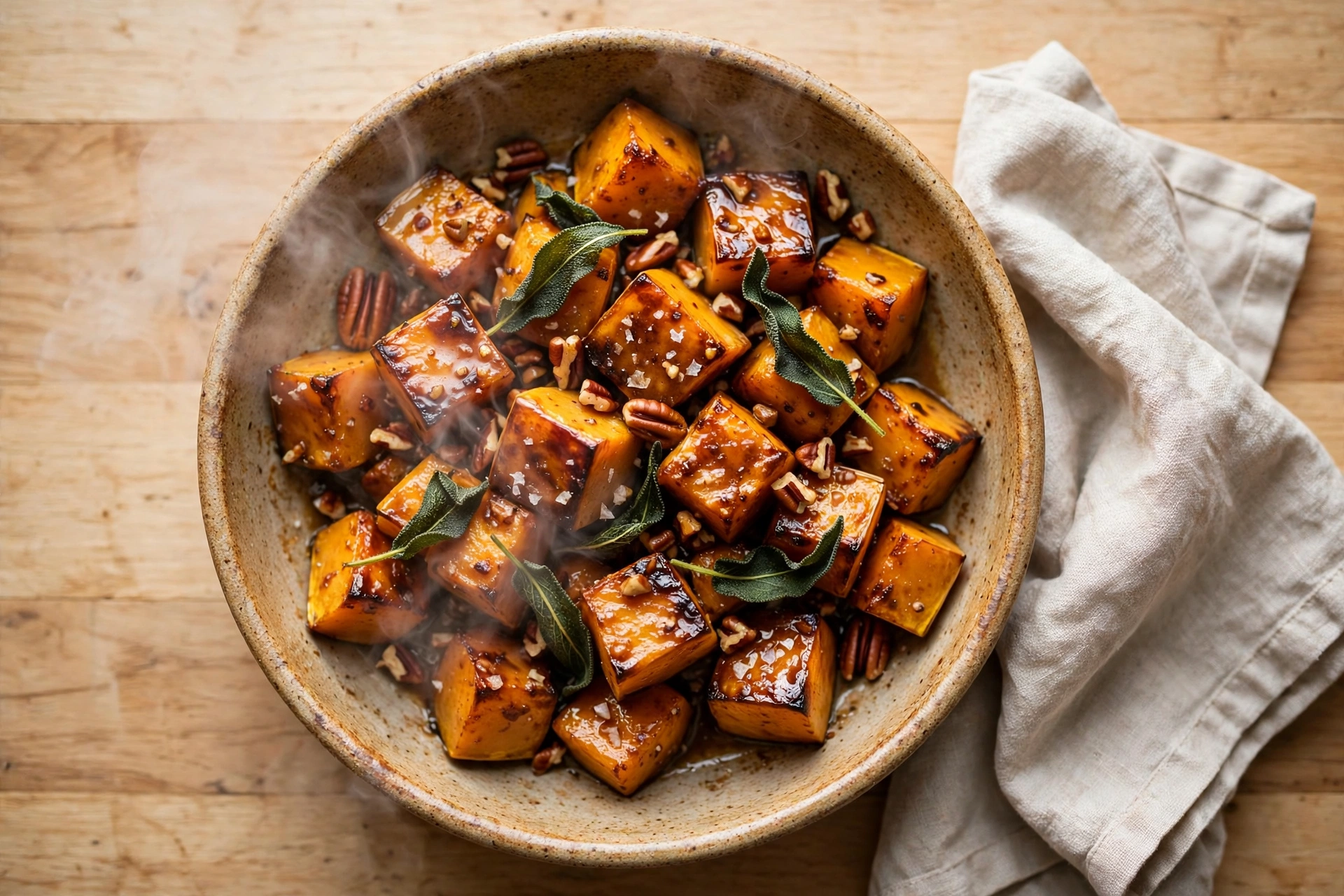
This 30-minute roasted butternut squash keeps the caramelized edges and drops the wait. The whole trick is geometry. Cubes cut at 3/4 inch instead of a full inch, on a screaming hot sheet pan at 450°F, roast through in 20 minutes flat, with more browned surface per bite than any big cube ever gets.
While the squash roasts, you make the finish on the stovetop: butter cooked to a nutty brown, fresh sage leaves fried crisp in it, and a handful of toasted pecans. Tossed over the hot cubes at the table, it turns a plain roasted vegetable into the side dish people ask about. No holiday heroics, no second oven, no hour lost.
On This Page
Small Cubes, Hot Oven: How the 30 Minutes Happen
Roasted butternut squash cooks from the outside in, so the clock is really a question of distance. Heat has to travel to the center of every cube, and a 1-inch cube gives it twice the road of a 3/4-inch cube. Shrink the cube and the roast collapses from 35 minutes to 20, with the bonus that smaller cubes brown on more faces.
Temperature does the other half of the work. Most recipes roast at 400°F, a gentle heat that steams as much as it roasts. At 450°F the surface moisture flashes off fast, sugars in the squash start to caramelize within the first 10 minutes, and the edges go properly amber instead of pale and soft.
Here is the honest clock. Peeling and cubing, with the microwave trick in the method below: 10 minutes, while the oven heats. Roasting: 20 minutes, with one flip at the halfway mark. The brown butter and pecans happen inside that roast, in about 4 minutes at the stove. Total: 30 minutes, and the squash lands on the table hot.
Butternut earns its place nutritionally, too. A cup of roasted cubes brings serious vitamin A, a solid dose of vitamin C and potassium, and about 7 grams of natural sugar that do the caramelizing for you. The nutrient profile is listed in the USDA FoodData Central database, if you like checking the numbers behind a side dish.
What Goes Into the Pan
Ten ingredients, split between the roast and the finish. The squash gets oil, salt, pepper and garlic powder, nothing that masks its flavor. The finish is where the personality lives: brown butter, sage and pecans, with an optional spoon of maple syrup if your table likes a sweet edge.
- Butternut squash, 1 large (about 3 pounds), peeled, seeded and cut into 3/4-inch cubes (about 6 cups)
- Olive oil, 2 tablespoons
- Fine sea salt, 1 teaspoon, plus flaky salt to finish
- Black pepper, 1/2 teaspoon, freshly ground
- Garlic powder, 1/2 teaspoon
- Smoked paprika, 1/2 teaspoon, optional but lovely
- Unsalted butter, 3 tablespoons, for the finish
- Fresh sage leaves, 8 to 10, plus more if your bunch is generous
- Pecans, 1/3 cup, chopped and toasted
- Pure maple syrup, 1 tablespoon, optional
Choose a squash with a long, thick neck and a small bulb; the neck is all flesh, no seeds, and it cubes fast. Pre-cut squash from the store is a fair shortcut on a busy day and saves about 4 minutes, though the pieces are often uneven and need a quick trim to match sizes. Frozen cubes work in an emergency, but they release water and will not caramelize the same way; roast them straight from frozen on their own pan and add 5 minutes.
Peel, Cube, Roast: The Method in Order
You need a sturdy peeler, a large sharp knife, and one or two rimmed sheet pans. Work in the order written; the squash goes into a fully hot oven, and the finish is built while it roasts.
- Heat the oven hard. Position a rack in the center and heat the oven to 450°F (230°C). Line a large rimmed sheet pan with parchment, or plan on two pans if your squash is generous.
- Soften the skin for 3 minutes. Pierce the whole squash 8 to 10 times with a fork and microwave it for 3 minutes. This is the peeling trick most recipes bury in a footnote: the skin loosens, the flesh stays raw, and a Y peeler strips it in long, easy ribbons.
- Peel, halve and seed. Peel the warm squash, cut off both ends, halve it lengthwise and scoop out the seeds and strings with a sturdy spoon. Save the seeds if you like; they roast into a snack with salt and oil.
- Cube at 3/4 inch. Cut the halves into 3/4-inch slices, then into 3/4-inch cubes. Uniform size is the whole schedule: small cubes finish early and scorch, big ones lag and stay firm.
- Season in a big bowl. Toss the cubes with the olive oil, fine salt, pepper, garlic powder and smoked paprika until every piece glistens. Seasoning in a bowl, not on the pan, coats all six faces of every cube.
- Spread with breathing room. Tip the cubes onto the pan in a single layer with a little space between pieces. Crowding is steaming; if the cubes touch everywhere, divide them between two pans.
- Roast 20 minutes, flip once. Roast for 10 minutes, flip the cubes with a thin spatula, and roast 8 to 10 minutes more, until tender all the way through with deep amber edges.
- Build the finish. During the last 5 minutes of roasting, melt the butter in a small skillet over medium heat. Add the sage leaves and the pecans and cook, swirling, until the butter foams, smells nutty and turns amber, about 3 to 4 minutes. Pull it off the heat before the milk solids darken past amber.
- Toss and serve. Tip the hot squash into a warm serving bowl, pour the brown butter, sage and pecans over it, add the maple syrup if using, and toss once. Finish with flaky salt and bring it straight to the table.
The Brown Butter and Sage Finish
Brown butter is regular butter with the water cooked out and the milk solids toasted, and it tastes like hazelnuts and warmth. On plain roasted squash it is a pleasant drizzle. On roasted butternut squash it is a transformation, because the squash’s own sugars and the butter’s toasted notes are cousins; they amplify each other instead of competing.
The sage matters as much as the butter. Fried in the foaming butter for 30 seconds, the leaves go from soft and fuzzy to crisp and translucent, with an earthy, almost piney flavor that reads unmistakably as Thanksgiving. Crumble one leaf over your own portion and eat the rest whole; they shatter like chips.
Watch the pan, not the clock. Brown butter moves from amber to burnt in under a minute, and the pecans in the pan will tell you the truth: when they smell toasted and the foam subsides into quiet bubbles flecked with gold, you are there. If it does go too far, do not serve it and wonder; start the 3 tablespoons over. It is a 4-minute lesson, not a ruined dinner.
Two Pans, One Flip: The Caramelization Rules
Soft, pale squash is the number one complaint about this dish, and it is never the squash’s fault. It is water management. Squash is mostly water, and in a crowded pan that water pools, boils and steams the cubes instead of letting them roast. Space is the fix: a single layer, a gap between pieces, a second pan the moment the first one looks full.
The flip matters for the same reason. The face against the hot pan does the browning; flipping once at 10 minutes gives a second face its turn without the fuss of constant turning. Resist flipping early, even if you are nervous. A cube lifted before its crust sets will stick and tear, leaving the best part welded to the parchment.
A dark, heavy sheet pan browns harder than a thin shiny one, and parchment keeps the sugars from cementing the cubes down. Skip the silicone mat here; it insulates, and insulation is the enemy of the amber edge. If your oven runs a fierce broiler element up top, roast on the center rack as written, not the upper one.
Swaps for Every Table and Season
The spice shelf is yours to raid. Cinnamon and a pinch of nutmeg push the squash toward the sweet potato end of the table, and a spoon of maple syrup in the toss makes it official. Chili flakes and lime zest at the end take it somewhere brighter, better next to grilled food than turkey. Curry powder, a full teaspoon, with coconut oil instead of olive oil, turns the same pan into a side for rice and chickpeas any weeknight of the year.
The finish swaps cleanly, too. Walnuts stand in for pecans at half the price. Crispy fried shallots replace the sage when the herb garden is done for the season. A crumble of goat cheese over the hot cubes adds a tangy, creamy contrast that plays well against the sweet squash, and a drizzle of balsamic glaze does the same job in a darker key.
For a dairy free table, brown the sage and pecans in a good olive oil instead of butter; you lose the toasted milk solids but keep the crunch and the herb. The dish is naturally vegetarian and gluten free as written, which makes it the easiest yes on a holiday menu full of special requests.
Roast Ahead and Reheat Like a Pro
Thanksgiving runs on oven space, so here is the schedule that keeps this dish at 30 minutes of work without stealing the turkey’s rack on the day. Cube and season the raw squash the night before, spread it on its pan, cover and refrigerate. Raw cubes hold beautifully for 24 hours; seasoned and ready, they go from fridge to oven with no morning prep at all.
Fully roasted squash also reheats with its edges intact. Spread the leftovers or the make ahead batch on a sheet pan and reheat at 425°F for 8 to 10 minutes, uncovered, until the edges sizzle again. The microwave works for a Tuesday lunch but softens the caramelization you worked for. Make the brown butter fresh at reheating time; it takes 4 minutes and tastes twice as alive as butter reheated from yesterday.
Leftovers keep 3 to 4 days in the fridge, following the timings in the USDA leftovers guide, and they are genuinely useful: folded into risotto, blended into soup with broth and a swirl of cream, or scattered over a grain bowl with feta. Freeze roasted cubes for up to 2 months; they soften on thawing, so send those to soups and mashes. Round out the fast holiday spread with our 30-Minute Funeral Potatoes, the 25-Minute Maple Pecan Roasted Brussels Sprouts and the 20-Minute Honey Butter Roasted Carrots, and every vegetable at the table is on the same honest clock. A skillet of our 20-Minute Skillet Creamed Corn fills the last gap.
Questions About This Roasted Butternut Squash
Do I really have to peel butternut squash before roasting cubes?
Yes, for cubes. The skin stays tough and papery even after roasting, and it never softens into the bite the way it does on delicata. The 3-minute microwave in the method loosens it so a Y peeler strips it fast. Save the no-peel route for halves roasted cut side down, where you scoop the flesh out afterward.
Why did my roasted squash come out soft instead of caramelized?
Almost always crowding or a cool oven. A piled pan traps steam, and 400°F does not drive it off fast enough. Spread the cubes in a single layer with space between them, use two pans if you need to, and hold the oven at 450°F. Also flip only once; constant turning keeps the surfaces wet and cool.
Can I roast the squash a day ahead for Thanksgiving?
Two ways. Cube and season it raw, spread on the pan, cover and refrigerate up to 24 hours, then roast as written. Or roast it fully, refrigerate, and reheat uncovered at 425°F for 8 to 10 minutes. Either way, make the brown butter and fry the sage at serving time; that finish is what makes it taste just cooked.
Can I use frozen butternut squash cubes?
You can, with adjusted expectations. Roast them straight from frozen on their own pan at 450°F for about 25 minutes, and season after the first 10 minutes, once the surface water has cooked off and the oil will stick. They will be tender and tasty, but softer and less caramelized than fresh cubes.
What do I do with the seeds?
Roast them like pumpkin seeds. Rinse off the strings, pat very dry, toss with a teaspoon of oil and a pinch of salt, and spread on a small pan at 325°F for 12 to 15 minutes, until they pop and turn golden. Scatter them over the finished squash for crunch, or set them out with drinks; they disappear either way.
How do I know the squash is done?
A cube should give completely when pressed with the back of a spoon, and a knife should slide through with no resistance. The visual cue matters more: look for deep amber, almost mahogany edges on at least half the cubes. Pale and tender means done but not roasted; give it 3 more minutes.
Print
30-Minute Roasted Butternut Squash
The fastest route to caramelized roasted butternut squash: small 3/4-inch cubes on a 450 degree sheet pan roast in 20 minutes, then get tossed in nutty brown butter with crisp fried sage and toasted pecans. A Thanksgiving side with a real finish, on a 30 minute clock.
- Total Time: 30 minutes
- Yield: 6 servings 1x
Ingredients
- 1 large butternut squash (about 3 pounds), peeled, seeded and cut into 3/4-inch cubes (about 6 cups)
- 2 tablespoons olive oil
- 1 teaspoon fine sea salt, plus flaky salt to finish
- 1/2 teaspoon black pepper, freshly ground
- 1/2 teaspoon garlic powder
- 1/2 teaspoon smoked paprika (optional)
- 3 tablespoons unsalted butter, for the finish
- 8 to 10 fresh sage leaves
- 1/3 cup pecans, chopped and toasted
- 1 tablespoon pure maple syrup (optional)
Instructions
- Heat the oven to 450°F (230°C) with a rack in the center. Line a large rimmed sheet pan with parchment, or plan on two pans.
- Pierce the whole squash 8 to 10 times with a fork and microwave for 3 minutes to loosen the skin. Peel with a Y peeler, cut off both ends, halve lengthwise and scoop out the seeds.
- Cut the squash into 3/4-inch slices, then into 3/4-inch cubes, keeping the size uniform.
- Toss the cubes in a large bowl with the olive oil, fine salt, pepper, garlic powder and smoked paprika until every piece glistens.
- Spread the cubes on the pan in a single layer with space between pieces; divide between two pans if crowded.
- Roast for 10 minutes, flip the cubes with a thin spatula, then roast 8 to 10 minutes more, until tender with deep amber edges.
- During the last 5 minutes, melt the butter in a small skillet over medium heat. Add the sage leaves and pecans and cook, swirling, until the butter foams, smells nutty and turns amber, 3 to 4 minutes. Remove from the heat.
- Tip the hot squash into a warm serving bowl. Pour the brown butter, sage and pecans over it, add the maple syrup if using, and toss once.
- Finish with flaky salt and serve straight away.
- Prep Time: 10 minutes
- Cook Time: 20 minutes
Nutrition
- Calories: 185
- Sugar: 6
- Sodium: 330
- Fat: 10
- Saturated Fat: 4
- Carbohydrates: 24
- Fiber: 4
- Protein: 3
- Cholesterol: 10