
In this article:
- Why This Skillet Cornbread Starts Heating Before the Batter Exists
- A Crisp, Lacy Crust Around a Soft and Buttery Crumb
- Fine, Medium or Stone Ground: Picking the Cornmeal
- Ingredients for Skillet Cornbread
- Mixing the Batter and Baking the Skillet Cornbread
- Pale Crust, Sunken Center and Dry Crumbs, Fixed
- Whipped Honey Butter and Three Ways to Finish the Wedges
- On the Table While the Turkey Rests: The Thanksgiving Timing Plan
- Whole Grain Cornmeal and a Slightly Lighter Wedge
- The Last Wedge Is Tomorrow’s Best Breakfast
- Skillet Cornbread Questions, Answered
Why This Skillet Cornbread Starts Heating Before the Batter Exists
Skillet cornbread lives or dies on one moment: the second the batter hits the pan. If the iron is truly hot, the edges set on contact and fry into a crisp, lacy crust while the center stays tender.
That is why this recipe heats the skillet inside the oven while the batter is mixed. The preheat is not dead time on the clock, it is the same seven minutes your hands spend whisking, and it is how the total stays at 25 minutes.
The batter itself is built for speed and forgiveness. Buttermilk and baking soda give lift the moment they meet, baking powder backs them up in the oven, and a modest amount of flour keeps the crumb soft instead of crumbly.
Butter does the work that bacon drippings do in older Southern versions. It foams in the hot pan, carries the corn flavor, and keeps this firmly a no pork recipe, which matters on a table where everyone should be able to take a wedge.
Skillet cornbread is the side I bake when the oven schedule collapses, because it asks for nothing but a bowl, a whisk and the pan it is served in. It slides into the exact gap where the turkey comes out and the table fills up.
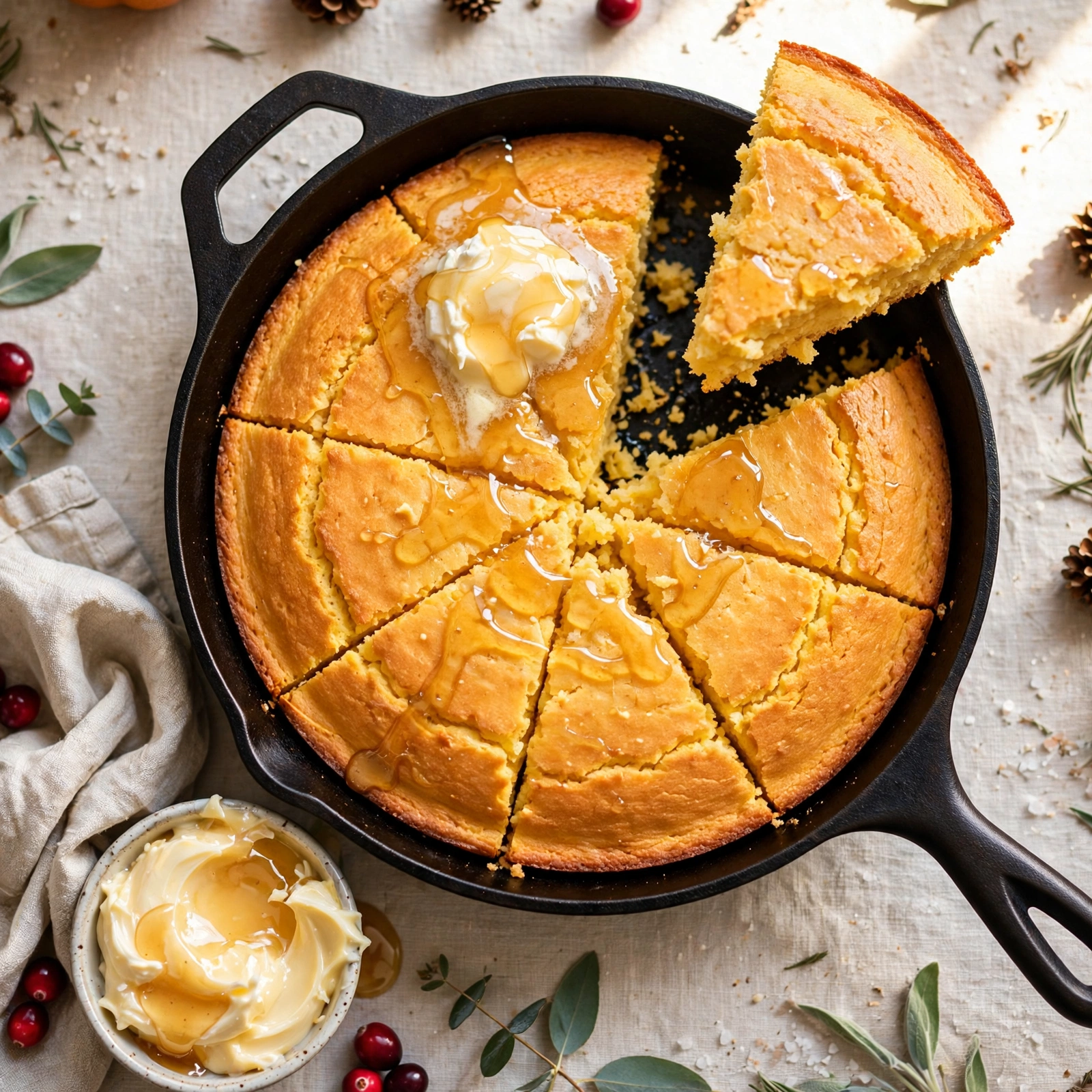
The wedges come out deep golden, with edges that crunch softly and a middle that steams when you split it open. A spoonful of whipped honey butter melts into the cut face and runs down into the crumb.
There is also a quiet strategy here. Cornbread is at its best in the first hour, so instead of baking early and reheating, this one is timed to be cut while everything else is being carried to the table.
One more practical gift: the whole recipe scales by feel rather than by equipment. A half batch fits an 8 inch skillet for a small table, and a double batch fills two pans for the years when the guest list ignores the invitations and grows anyway.
Nothing about the method changes when you scale it. Same hot pan, same ten strokes, same golden rule of pulling the wedges when the toothpick turns clean. The skillet simply gets more company in the oven.
A Crisp, Lacy Crust Around a Soft and Buttery Crumb
The contrast is the whole point of skillet cornbread. The bottom and sides, fried against hot buttered iron, turn mahogany and crisp, while the interior stays pale gold, moist and fine textured.
Fine or medium cornmeal gives that tender crumb. Coarse stone ground meal has its place, but it drinks more liquid and can read gritty in a fast batter, so save it for slow weekend versions.
Two tablespoons of sugar will not make this taste like cake. They round the corn’s natural sweetness, help the top color evenly, and balance the salt, which is doing quiet structural work in every bite.
The whipped honey butter is not a garnish, it is the second texture. Whipping traps air, so the butter spreads like frosting and melts slowly over a hot wedge instead of vanishing on contact.
Serve the wedges straight from the skillet if you can. The iron holds heat at the table, the last wedge stays warm, and the pan itself is the kind of centerpiece a Thanksgiving table understands.
Fine, Medium or Stone Ground: Picking the Cornmeal
The grind of the cornmeal decides the personality of the wedge before anything else happens. Fine meal melts into the flour and gives a cake like, even crumb; medium meal keeps a gentle grain that you can feel between your teeth.
Stone ground cornmeal is the romantic choice, and it does carry the deepest corn flavor because the germ stays in the grind. It also absorbs more liquid and bakes up denser, which fights against the light, fast crumb this recipe promises.
My ruling for this skillet: fine or medium, whichever your store shelves reliably, and buy the bag you will finish within a few months. Cornmeal goes stale like any whole grain, and a flat, dusty bag makes a flat, dusty wedge.
Yellow cornmeal gives the classic golden wedge and a slightly sweeter read. White cornmeal bakes paler and a touch more delicate; the recipe works identically with either, so let the color you want on the table make the call.
One label worth checking is degerminated versus whole grain. Degerminated meal keeps longer in the pantry; whole grain meal carries more flavor and fiber. Both set properly in the hot skillet, so this is a pantry decision, not a technique one.
Ingredients for Skillet Cornbread
- 1 1/4 cups fine or medium yellow cornmeal
- 3/4 cup all-purpose flour
- 2 tablespoons granulated sugar
- 1 tablespoon baking powder
- 1/2 teaspoon baking soda
- 3/4 teaspoon fine sea salt
- 1 cup buttermilk, at room temperature
- 2 large eggs
- 5 tablespoons butter, melted, plus 1 tablespoon for the skillet
- 4 tablespoons soft butter, for the whipped honey butter
- 2 tablespoons honey, plus more for drizzling
- Flaky salt, for finishing
Room temperature buttermilk matters more than it sounds. Cold liquid thickens the batter and slows the rise, while a cool but not cold bowlful pours smoothly and bakes evenly from edge to center.
Mixing the Batter and Baking the Skillet Cornbread
- Put a 10 inch cast iron skillet in the oven and heat the oven to 450°F. The skillet heats while you mix, which is how the total time stays at 25 minutes.
- Whisk the cornmeal, flour, sugar, baking powder, baking soda and salt in a large bowl until evenly combined and no soda flecks remain.
- Whisk the buttermilk and eggs in a second bowl, then whisk in the melted butter in a thin stream so it stays emulsified.
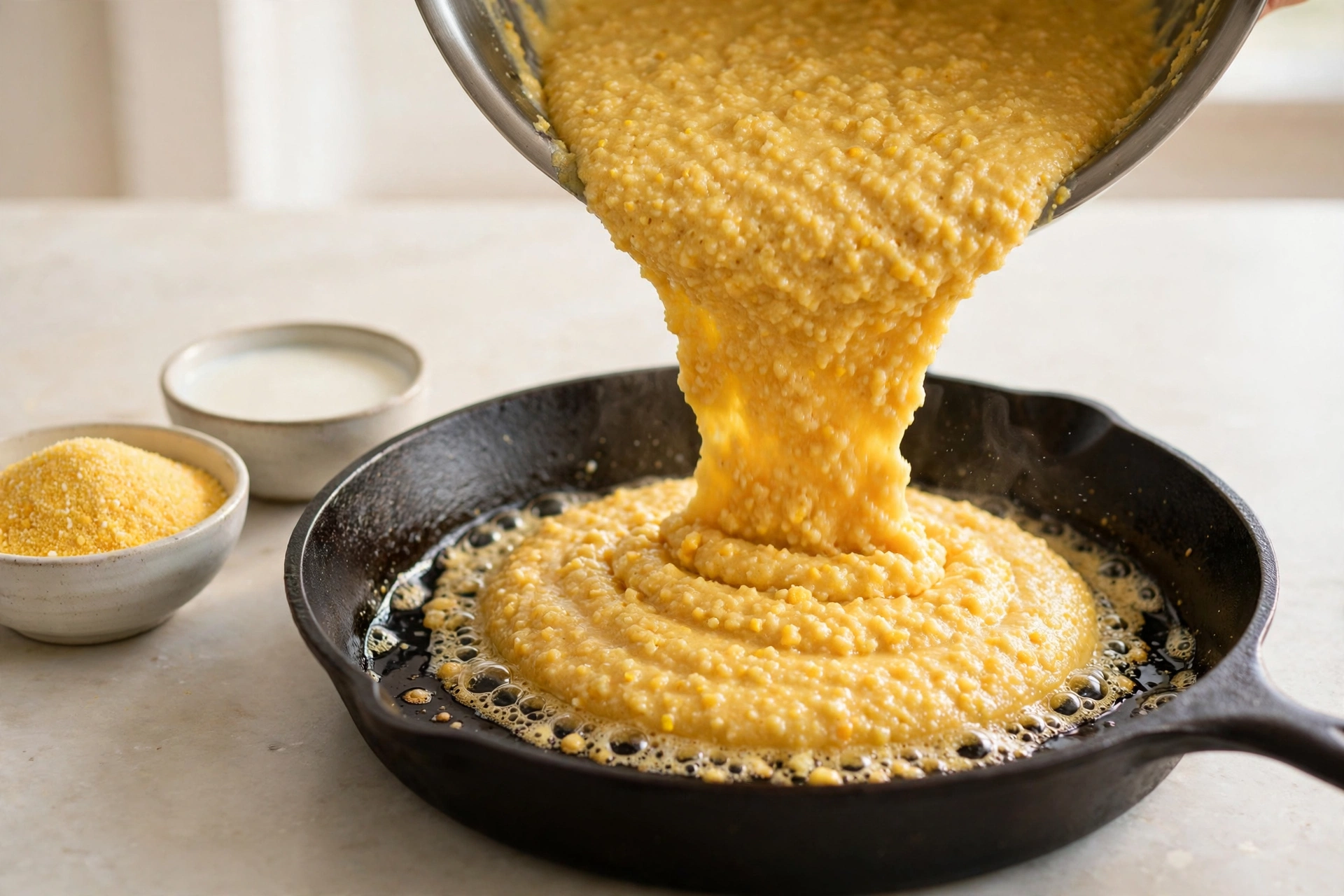
- Pour the wet mixture into the dry and stir with a spoon only until no dry streaks remain, about 10 strokes. The batter will be thick and a little lumpy, and that is correct.
- Pull the hot skillet out with a mitt, add the remaining tablespoon of butter, and swirl until it foams and coats the bottom and the sides.
- Scrape the batter into the skillet, spread it gently to the edges, and return it to the oven at once. You should hear a soft sizzle as it lands.
- Bake for 17 to 18 minutes, until the top is deep golden, the edges pull slightly away from the sides, and a toothpick in the center comes out clean.
- While it bakes, whip the soft butter and honey together with a fork until pale and fluffy.
- Rest the cornbread for 3 minutes, cut into 8 wedges in the skillet, and serve warm with the whipped honey butter and a pinch of flaky salt.
Pale Crust, Sunken Center and Dry Crumbs, Fixed
A pale, soft bottom means the skillet was not hot enough when the batter went in. There is no rescue after the fact, so next time give the pan the full preheat and wait for the butter to foam, not just melt.
A center that sinks usually traces back to the oven door. Opening it in the first ten minutes drops the temperature right when the baking soda is spending its lift, so peek through the window instead.
Dry, crumbly wedges are almost always an overmixing or overbaking story. Ten strokes is enough for this batter, and the toothpick should come out clean but not bone dry; a few moist crumbs are a good sign, not a problem.
If the edges stick, the pan was under buttered or the cornbread was cut too soon. Three minutes of rest lets the crust contract slightly and release, and a thin knife run around the rim finishes the job.
One more quiet culprit is old baking powder. If yours has been open for more than six months, test a pinch in hot water. It should fizz with conviction; a lazy bubble means a flat wedge.
If the top cracks in a wide split, the oven ran hot and the crust set before the center finished rising. It is cosmetic, not structural: the whipped butter settles into the crack, and the wedge eats exactly as it should.
And if the crumb tastes faintly soapy, the baking soda was heavy handed or unevenly whisked. Measure it level, whisk the dry bowl thoroughly, and the problem leaves with the next batch.
Whipped Honey Butter and Three Ways to Finish the Wedges
The classic finish is the whipped honey butter with flaky salt, and it is the one to serve when the table includes traditionalists. The salt lands last so the crystals stay whole against the sweet butter.
For a savory table, whip the butter with a teaspoon of finely chopped fresh thyme and a pinch of black pepper instead of the honey. It leans toward the turkey and gravy side of the plate and disappears just as fast.
A spiced version suits the dessert end of the meal: honey butter with a quarter teaspoon of cinnamon and a tiny pinch of cayenne. Serve the leftover wedges warm with it and nobody will call them leftovers.
However you finish it, put the butter on at the table, wedge by wedge. Butter spread in the kitchen melts into the crumb and vanishes; butter melting on a hot wedge in front of a guest is a small piece of theater.
On the Table While the Turkey Rests: The Thanksgiving Timing Plan
Here is the slot this recipe was designed for. The turkey needs 30 minutes of rest under foil; the skillet cornbread needs 25 minutes from cold oven to cut wedges, so the two clocks finish together.
Set the skillet in the oven the moment the turkey comes out. Mix the batter during the preheat, bake while the turkey gravy comes together on the stove, and slice the wedges as the bird is carved.
Bread is the course this table already loves in every form, from the garlic butter dinner rolls that anchor the bread basket to the softer Thanksgiving dinner rolls for gravy swiping. The cornbread takes the crisp, golden corner of that same basket.
Round the pan work out with one more skillet side, the skillet creamed corn, which can hold warm on the back burner while the cornbread bakes. Two hot pans, one oven, no juggling.
If the meal runs late, hold the baked cornbread in its skillet, covered with a clean towel, for up to 20 minutes. Beyond that, a 5 minute warm through at 300°F brings the crust back before serving.
Whole Grain Cornmeal and a Slightly Lighter Wedge
Swap half the all-purpose flour for whole wheat flour and choose whole grain cornmeal when the bag offers it. The wedge turns a shade deeper and nuttier, and the fiber rises, which is the direction the USDA MyPlate grains guidance points to when it suggests making half your grains whole.
For a lighter wedge, cut the melted butter in the batter to 3 tablespoons and add 2 tablespoons of plain Greek yogurt. The crumb stays moist, the crust stays crisp, and nobody at the table will file a report about the difference.
A dairy free version works cleanly: use a plant based buttermilk made from oat milk and a teaspoon of lemon juice, and a good baking butter substitute in both the batter and the pan. Keep the temperatures and timing exactly the same.
Each wedge, with its share of the honey butter, lands at about 285 calories, 32 grams of carbohydrates, 9 grams of sugar, 15 grams of fat, 5 grams of protein and 440 milligrams of sodium. Honest numbers for a holiday bread that tastes like it costs more.
The Last Wedge Is Tomorrow’s Best Breakfast
Skillet cornbread earns its place twice: once beside the turkey, and once the next morning, split, toasted in butter and eaten with a fried egg while the house is still quiet.
Store leftovers wrapped at room temperature for a day, or refrigerated for three. The skillet goes back in a 300°F oven for five minutes and the crust remembers everything.
Bake it once this season and the timing becomes muscle memory: pan in the oven, batter in the bowl, wedges on the table. Hanna
Skillet Cornbread Questions, Answered
Can I bake skillet cornbread without a cast iron skillet?
Yes. Use a 9 inch metal cake pan or an oven safe skillet, and grease it well; skip the long preheat so a thin pan does not scorch the butter. The crust will be a shade paler and softer, but the timing and the crumb stay the same.
What can I use instead of buttermilk in this cornbread?
Stir 1 tablespoon of lemon juice or white vinegar into 1 cup of regular milk and wait 5 minutes. The acidity is what the baking soda needs, and the tang reads almost identical in the baked wedge.
Why did my skillet cornbread come out dry and crumbly?
Two usual causes: the batter was stirred past the point where the dry streaks vanished, or the wedges baked beyond 18 minutes. Count about 10 strokes, and pull the pan when the toothpick shows a few moist crumbs.
Can I turn this batter into cornbread muffins for Thanksgiving?
Yes, and it is a good plan for a kids table. Fill a buttered 12 cup muffin tin two thirds full and bake at 450°F for 11 to 12 minutes. The recipe makes about 10 muffins with the same crisp edge on every one.
How far ahead can I make skillet cornbread for the holiday meal?
It is best inside the first hour, which is why the recipe is timed to the turkey’s rest. If you must bake ahead, hold it in the skillet under a towel for 20 minutes, or reheat the baked wedges at 300°F for 5 minutes to bring the crust back.
Skillet Cornbread
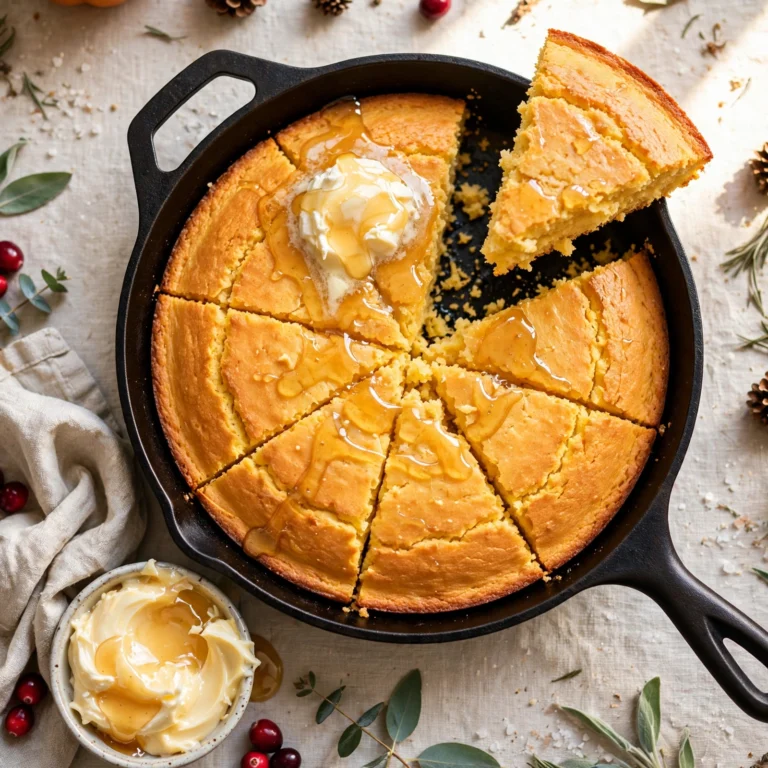
Skillet cornbread in 25 minutes, door to door: the cast iron skillet preheats while a one bowl buttermilk batter is mixed, the batter fries into a crisp, lacy crust on contact, and the wedges are served with whipped honey butter and flaky salt. The Thanksgiving bread timed to the turkey’s rest, with no pork at any stage.
- Total Time: 25 minutes
- Yield: 8 wedges 1x
Ingredients
- 1 1/4 cups fine or medium yellow cornmeal
- 3/4 cup all-purpose flour
- 2 tablespoons granulated sugar
- 1 tablespoon baking powder
- 1/2 teaspoon baking soda
- 3/4 teaspoon fine sea salt
- 1 cup buttermilk, at room temperature
- 2 large eggs
- 5 tablespoons butter, melted, plus 1 tablespoon for the skillet
- 4 tablespoons soft butter, for the whipped honey butter
- 2 tablespoons honey, plus more for drizzling
- Flaky salt, for finishing
Instructions
- Put a 10 inch cast iron skillet in the oven and heat the oven to 450°F. The skillet heats while you mix, which is how the total time stays at 25 minutes.
- Whisk the cornmeal, flour, sugar, baking powder, baking soda and salt in a large bowl until evenly combined and no soda flecks remain.
- Whisk the buttermilk and eggs in a second bowl, then whisk in the melted butter in a thin stream so it stays emulsified.
- Pour the wet mixture into the dry and stir with a spoon only until no dry streaks remain, about 10 strokes. The batter will be thick and a little lumpy, and that is correct.
- Pull the hot skillet out with a mitt, add the remaining tablespoon of butter, and swirl until it foams and coats the bottom and the sides.
- Scrape the batter into the skillet, spread it gently to the edges, and return it to the oven at once. You should hear a soft sizzle as it lands.
- Bake for 17 to 18 minutes, until the top is deep golden, the edges pull slightly away from the sides, and a toothpick in the center comes out clean.
- While it bakes, whip the soft butter and honey together with a fork until pale and fluffy.
- Rest the cornbread for 3 minutes, cut into 8 wedges in the skillet, and serve warm with the whipped honey butter and a pinch of flaky salt.
- Prep Time: 7 minutes
- Cook Time: 18 minutes
1 commentaire sur « 25-Minute Skillet Cornbread (Crisp Crust, Whipped Honey Butter) »