
In this article:
- Why This Homemade Eggnog Cooks Fast and Stays Silky
- Nutmeg Warmth in a Custard-Soft Sip
- Twenty Minutes, With the Ice Bath Counted
- Ingredients for Homemade Eggnog
- Warm, Temper, Thicken: Five Moves to a Silky Nog
- The 165 Degree Rule That Makes It Worry-Free
- Fixes for Scrambled, Thin or Too-Sweet Eggnog
- Lighter Cups, Dairy-Free Swaps and Flavor Twists
- Storing Homemade Eggnog and Serving It All Week
- The Mug That Starts the Season
- FAQ
Why This Homemade Eggnog Cooks Fast and Stays Silky
Homemade eggnog works here because it borrows the structure of a classic custard and then refuses to waste a single minute. Yolks and sugar are whisked to a pale ribbon first, so the base thickens quickly and evenly once the warm milk arrives.
The cooking is gentle and brief, ten minutes at most, and it stops at a precise 165°F. That temperature is high enough to make the eggs completely safe and low enough to keep the custard pouring like silk instead of setting like pudding.
The real trick is what happens next. Instead of hours of passive chilling, the hot custard goes straight into an ice bath and is stirred cool in five minutes, so a cooked, safe, fully chilled glass is in your hand in 20 minutes total.
Nothing in the method is exotic, and that is deliberate. A bowl, a saucepan, a whisk and a sieve are the whole toolkit, because a holiday drink should not require a shopping trip. The discipline lives in the temperatures and the order of the steps, not in the equipment.
Homemade eggnog is the first thing I make when December lands, because one pitcher perfumes the whole kitchen with nutmeg and turns an ordinary evening into the start of the season. This version is cooked, calm and completely alcohol free, so every mug at the table is poured from the same pitcher.
The texture is the point. It coats the spoon, pours in a slow ribbon, and drinks like melted vanilla ice cream with warm spice running through it. A cloud of softly whipped cream folded in at the end keeps it light instead of heavy.
If your family bakes with the leftovers, bookmark our overnight eggnog French toast casserole for the morning after. And for the full holiday spread, the pitcher sits happily next to everything on our Christmas Eve finger food list.
There is also a quiet practical win here: the batch is sized for real life. Six mugs disappear in an evening, nobody is storing a gallon jug for a week, and the recipe doubles cleanly when the guest list grows. Small batch, fast chill, no leftovers anxiety.
Nutmeg Warmth in a Custard-Soft Sip
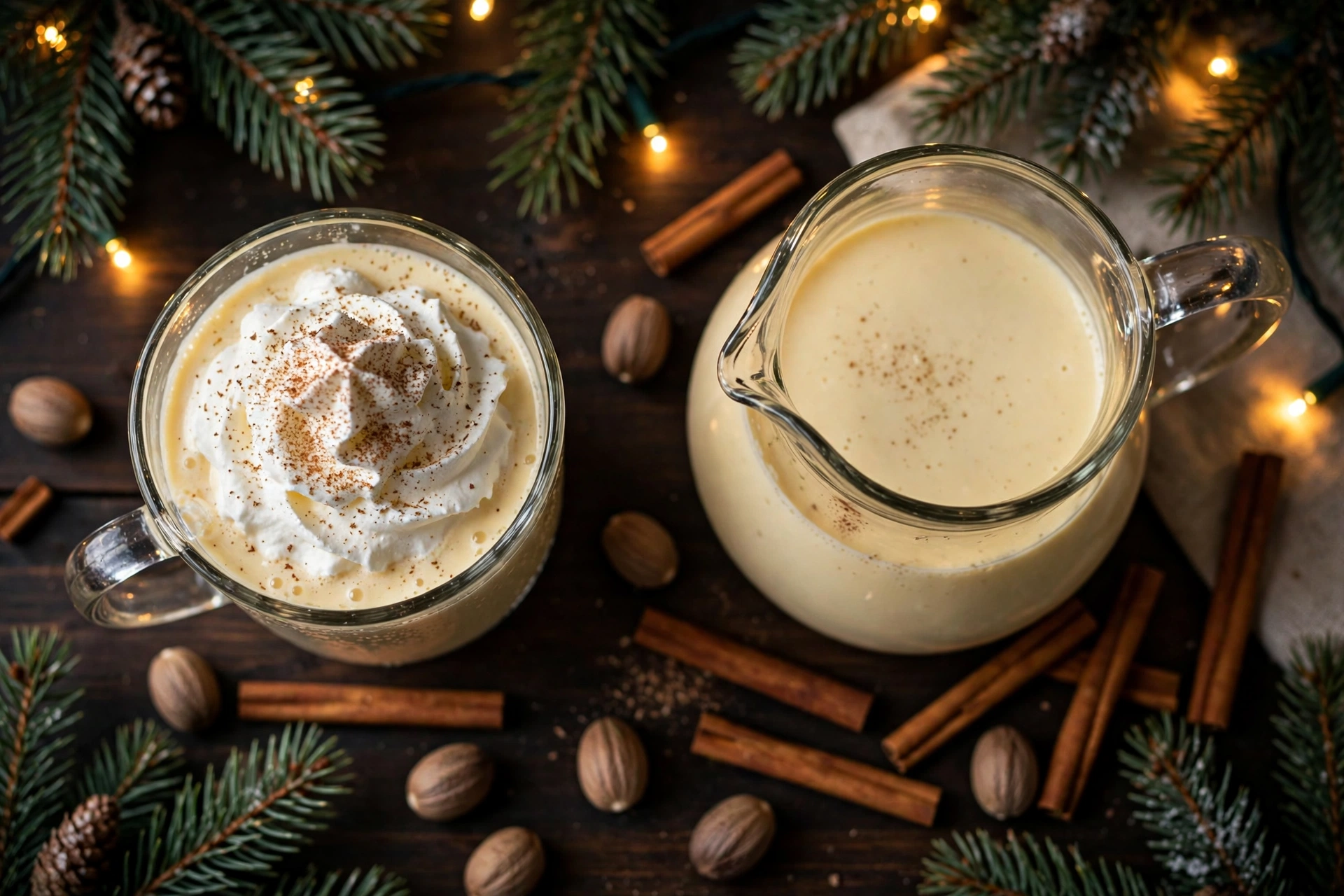
The first sip is all warmth. Freshly grated nutmeg blooms in the hot milk and reads as sweet spice rather than heat, while a small measure of cinnamon stays in the background and rounds everything out.
Vanilla goes in off the heat, after straining, so its perfume survives intact. Added too early, vanilla flattens under sustained heat; added at the end, it lifts the whole glass and makes the dairy taste richer than it is.
The body comes from yolks, not from gums or starch. Six yolks give the nog its golden color and its custard softness, and the sugar is measured to sweeten without masking the milk. Each sip finishes clean, with spice lingering longer than sweetness.
Temperature changes the flavor more than people expect. Served properly cold, the nutmeg sharpens and the custard feels refreshing; served lukewarm, it tastes flat and overly sweet. The ice bath is not a shortcut around chilling, it is what makes the flavor land correctly.
The whipped cream folded through at the end adds a final contrast: tiny air pockets that make the dense custard drink lighter than it reads. A last dusting of nutmeg on the surface gives the nose its signal before the first taste.
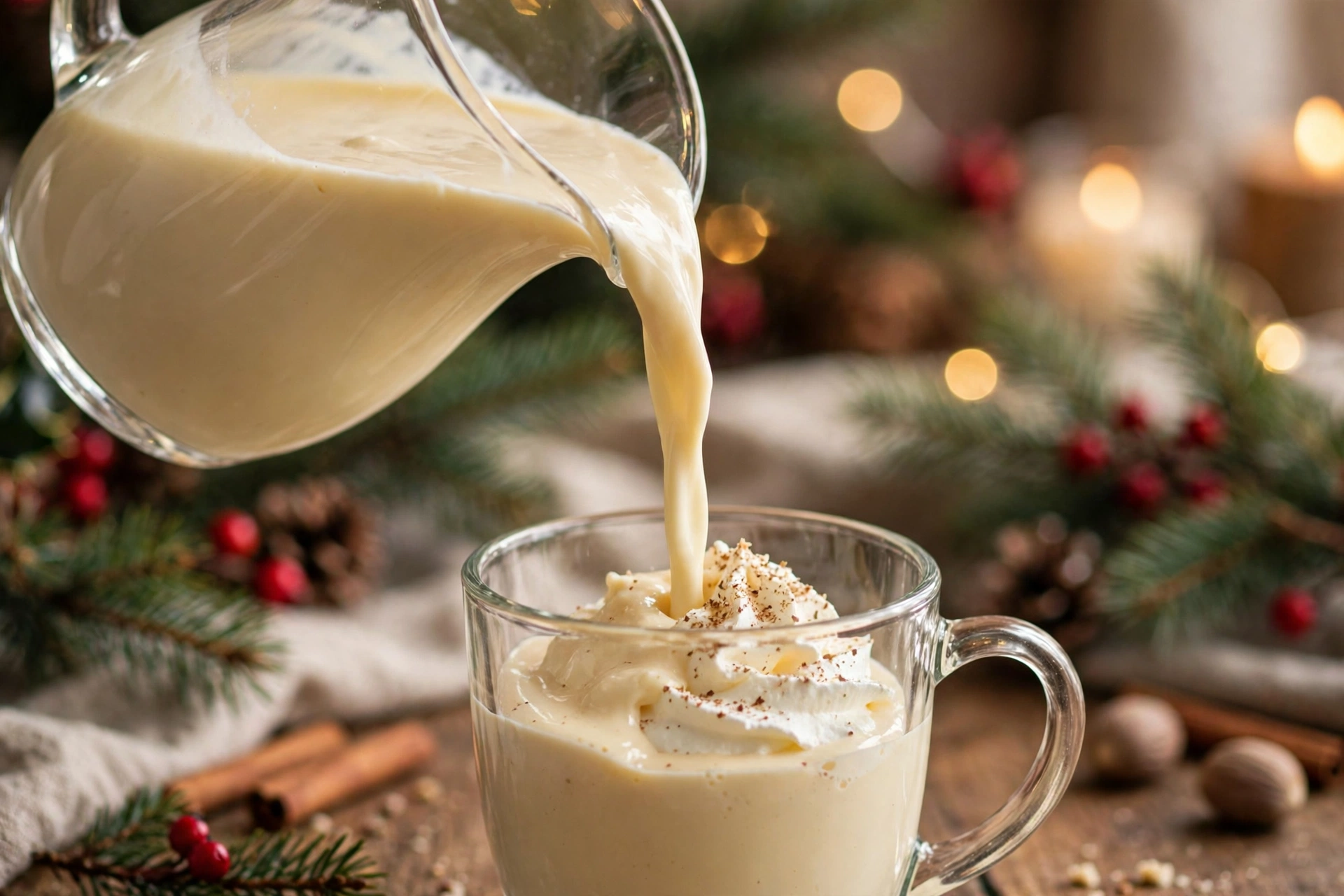
Look at the pour before you taste. A good nog falls from the ladle in a slow, unbroken ribbon and sheets the inside of the glass for a second before settling. If it drops in thin splashes, it wants another minute of cooking; if it plops, it wants a splash of milk.
The color tells the same story. Yolks give the custard a deep cream tint, almost pale gold, that no carton version matches. Against the white foam and the dark nutmeg dusting, a filled mug looks like the season in miniature.
Twenty Minutes, With the Ice Bath Counted
Most cooked eggnog recipes hide their real cost in the chilling line: two hours, three hours, overnight. The custard itself only cooks for about ten minutes, so the honest fix is to chill actively instead of passively.
An ice bath does in five minutes what a fridge does in two hours for a batch this size. The bowl sits in ice water, you stir lazily, and the custard drops from steaming to cool while you rinse the saucepan.
The batch is deliberately modest, about five cups, six generous mugs. A smaller volume cooks faster, chills faster and fits a weeknight craving or a small gathering. Doubling is easy, but add two minutes to the ice bath and stir a little more often.
Everything else is pantry rhythm: yolks whisk while the milk warms, the sieve and the ice bowl are set out before the custard thickens. Nothing waits on anything else, which is exactly how the 20 minutes stays honest.
Count the minutes out loud once and the rhythm sticks: five to whisk and warm, five to temper and thicken, five in the ice bath, five to pour and dust. It fits inside the time it takes a frozen appetizer tray to bake, which makes it an easy add to any holiday evening.
Ingredients for Homemade Eggnog
- 6 large egg yolks
- 1/2 cup (100 g) granulated sugar
- 2 cups (480 ml) whole milk
- 1 cup (240 ml) heavy cream
- 1/2 teaspoon freshly grated nutmeg, plus more for serving
- 1/4 teaspoon ground cinnamon
- 1 pinch fine sea salt
- 1 teaspoon pure vanilla extract
- 1/2 cup (120 ml) heavy cream, whipped to soft peaks (optional, for folding in)
- Cinnamon sticks, to serve (optional)
Warm, Temper, Thicken: Five Moves to a Silky Nog
- Whisk the yolks and sugar in a medium bowl until pale, thick and ribbon-like, about 1 minute. Set the bowl next to the stove.
- Warm the milk, the 1 cup of cream, nutmeg, cinnamon and salt in a medium saucepan over medium heat until steaming with small bubbles at the edges, about 4 minutes. Do not let it boil.
- Temper the yolks: ladle the hot milk into the yolk bowl in a slow, thin stream, whisking constantly, until about half the milk is added.
- Pour everything back into the saucepan. Cook over medium-low heat, stirring constantly with a spatula, until the custard reaches 165°F (74°C) and coats the back of a spoon, 4 to 5 minutes. Never let it boil.
- Strain at once through a fine mesh sieve into a clean bowl and stir in the vanilla. Set the bowl over a larger bowl of ice water and stir for 5 minutes, until cool to the touch. Fold in the whipped cream if using, dust with nutmeg and serve, or refrigerate up to 3 days.
The 165 Degree Rule That Makes It Worry-Free
The old fashioned raw version is the reason many people quietly avoid homemade eggnog, and they are right to. Raw eggs can carry Salmonella, and no splash of anything in the pitcher fixes that. Cooking the base is what makes the drink safe for everyone at the table.
The USDA cooks its egg base to 160°F, as the USDA method shared by LSU AgCenter explains, and then cools it quickly in a bowl of ice water. We take the custard five degrees higher, to 165°F, for a small margin that costs nothing in texture.
A thermometer removes all the guesswork. The custard is ready the moment it reads 165°F and coats a spoon; beyond 170°F it risks curdling, so pull it off the heat and strain immediately. Pasteurized yolks are a fine extra precaution, but with this cooked base they are not required.
One more habit matters: chill the cooked base promptly rather than leaving it warm on the counter. The ice bath is therefore doing double duty, food safety and texture at once, dropping the custard through the warm zone in minutes instead of hours.
Serve it cold, keep the pitcher refrigerated between rounds, and return leftovers to the fridge within two hours. Those three small disciplines are the whole difference between a nostalgic drink and a risky one.
Fixes for Scrambled, Thin or Too-Sweet Eggnog
Tiny cooked egg bits mean the custard got too hot or the tempering stream was too fast. The rescue is already in the method: strain without pressing, and the nog underneath is smooth. Next time, lower the heat and pour the milk in a thinner stream.
A nog that pours too thin usually left the stove early. Return it to gentle heat for one more minute, or fold in the optional whipped cream, which adds body without more cooking. Remember it also thickens slightly as it cools.
Too thick after a night in the fridge is the most common note I hear. Whisk in cold milk one tablespoon at a time until it pours again, or serve it over a cube of ice and let the melt do the work.
Too sweet is fixed with dilution, not salt: a quarter cup of extra milk softens the sugar without changing the character. A flat, eggy taste usually means the vanilla went in too early or the nutmeg was stale; grate it fresh and the difference is immediate.
If the surface sets a skin while it chills, do not stir it in. Lift it off with a spoon, whisk the nog smooth underneath, and cover the pitcher with wrap pressed directly on the surface next time. The skin is harmless, but its texture has no fans.
Lighter Cups, Dairy-Free Swaps and Flavor Twists
For a lighter glass, swap the heavy cream for half and half and skip the whipped cream fold. The nog pours thinner and tastes more like spiced milk, which some people honestly prefer, and the method and timing stay identical.
Dairy free works with full fat oat milk and coconut cream in the same measures. The custard sets a touch softer and carries a gentle coconut note that sits well with nutmeg. Cook it to the same 165°F and chill it the same way.
Flavor twists worth trying: a pinch of ground cardamom with the cinnamon for a Scandinavian lean, a strip of orange zest warmed in the milk for brightness, or a tablespoon of cocoa whisked into the yolks for a chocolate nog that children claim first. Each keeps this homemade eggnog firmly in the 20 minute frame.
For a coffeehouse version, pour a mug over a shot of hot espresso. It lands somewhere between a latte and a dessert, and it is the fastest way to make the batch disappear.
A spiced sugar rim is the party trick that costs thirty seconds: mix two tablespoons of sugar with a quarter teaspoon of nutmeg, wet the rim of each small glass with milk, and dip. It looks catered, tastes like the first sip of the season, and signals to guests that the pitcher is worth slowing down for.
Storing Homemade Eggnog and Serving It All Week
Poured into a clean jar or pitcher and refrigerated at 40°F, the nog keeps for 3 days. The flavor actually deepens on day two, as the nutmeg and cinnamon settle into the custard. Whisk or shake before serving, since a little separation is natural.
Fold in the whipped cream only for the glasses you are serving now. Stored already folded, the foam slackens and the texture goes flat by the next day. A fresh small whip takes two minutes and restores the cloud.
Freezing is the one route I skip: the custard turns grainy and watery as it thaws, and no amount of whisking fully brings it back. This batch is small on purpose, so a fresh pitcher is always the better answer. Serve it beside a plate of peppermint white chocolate fudge or a mug of candy cane hot chocolate for the drinkers who want options.
For serving a crowd, set the pitcher in a shallow bowl of crushed ice on the table. It holds a proper chill through a long evening without diluting a single glass, and a small bowl of extra grated nutmeg beside it lets everyone finish their own mug the way they like it.
The Mug That Starts the Season
Homemade eggnog, cooked properly and chilled fast, asks for 20 minutes and gives back the whole feeling of December in a glass. Warm spice, real custard body, and no raw egg questions hanging over the pitcher.
Make it the night the tree goes up, dust it generously, and let the first sip do the decorating. Tell me in the comments whether your house folds in the whipped cream or keeps it classic. Hanna
FAQ
What temperature does homemade eggnog need to reach to be safe?
Cook the custard base to at least 160°F, the USDA reference point for egg dishes. This recipe goes to 165°F for a small safety margin, stirring constantly and never boiling. A thermometer is the reliable way to know you are there.
My eggnog has tiny cooked egg bits in it. Can I still save it?
Yes. Strain the hot custard through a fine mesh sieve without pressing on the solids, and the eggnog underneath stays smooth. The bits come from heat that ran too high or a tempering stream that was too fast, so lower both next time.
Can I make homemade eggnog three days ahead?
Yes, it keeps 3 days refrigerated in a clean covered pitcher, and the spice flavor deepens by day two. Whisk or shake before serving, and fold in the whipped cream fresh for each round rather than storing it already folded.
Why did my eggnog get so thick in the fridge, and how do I thin it?
Custard keeps setting as it chills, so a firm pour the next day is normal. Whisk in cold milk one tablespoon at a time until it pours the way you like, or serve it over ice and let the melt loosen it.
Can I freeze homemade eggnog for later?
It is not recommended. The custard turns grainy and separates as it thaws, and whisking does not fully restore the silky texture. The batch is small and takes 20 minutes, so a fresh pitcher beats a frozen one every time.
Homemade Eggnog
Cooked homemade eggnog that is ready to drink in 20 minutes: yolks and sugar whisked to a ribbon, warm spiced milk tempered in, a gentle cook to 165°F, then a 5 minute ice bath instead of hours of chilling. Silky, nutmeg warm and completely alcohol free, with softly whipped cream folded in at the end.
- Total Time: 20 minutes
- Yield: about 5 cups (6 servings) 1x
Ingredients
- 6 large egg yolks
- 1/2 cup (100 g) granulated sugar
- 2 cups (480 ml) whole milk
- 1 cup (240 ml) heavy cream
- 1/2 teaspoon freshly grated nutmeg, plus more for serving
- 1/4 teaspoon ground cinnamon
- 1 pinch fine sea salt
- 1 teaspoon pure vanilla extract
- 1/2 cup (120 ml) heavy cream, whipped to soft peaks (optional, for folding in)
- Cinnamon sticks, to serve (optional)
Instructions
- Whisk the yolks and sugar in a medium bowl until pale, thick and ribbon-like, about 1 minute. Set the bowl next to the stove.
- Warm the milk, the 1 cup of cream, nutmeg, cinnamon and salt in a medium saucepan over medium heat until steaming with small bubbles at the edges, about 4 minutes. Do not let it boil.
- Temper the yolks: ladle the hot milk into the yolk bowl in a slow, thin stream, whisking constantly, until about half the milk is added.
- Pour everything back into the saucepan. Cook over medium-low heat, stirring constantly with a spatula, until the custard reaches 165°F (74°C) and coats the back of a spoon, 4 to 5 minutes. Never let it boil.
- Strain at once through a fine mesh sieve into a clean bowl and stir in the vanilla. Set the bowl over a larger bowl of ice water and stir for 5 minutes, until cool to the touch.
- Fold in the whipped cream if using, dust with nutmeg and serve, or refrigerate up to 3 days.
- Prep Time: 5 minutes
- Cook Time: 10 minutes
2 commentaires sur « 20-Minute Homemade Eggnog: Cooked, Silky and Safe »