
In this article:
- Why These Cinnamon Sugar Pecans Disappear First
- Warm Cinnamon, Deep Sugar, One Clean Snap
- Read the Sugar: From Glossy Syrup to Sandy Coat
- Why Two Sugars Beat One
- Ingredients for Cinnamon Sugar Pecans
- Toast, Bubble, Turn Sandy: The Stovetop Sequence
- The Three Ways Candied Pecans Go Soft
- Vanilla Salt, a Cayenne Whisper, and a Maple Swap
- Jars, Double Batches, and the Gift Math
- A Month of Crunch, If They Last That Long
- The Bowl That Empties Itself
- FAQ
Why These Cinnamon Sugar Pecans Disappear First
Cinnamon sugar pecans work because they sit exactly between candy and snack: sweet enough to feel like a treat, nutty enough to eat by the handful, and crisp enough to hear across the room. The stovetop gets them there in twenty minutes.
The classic method coats raw nuts in egg white and bakes them for an hour. This version skips the egg, the oven, and the wait. A small amount of water dissolves the sugars into a syrup that clings, then crystallizes right in the pan.
Crystallization is the whole trick, and it is a visual one. The syrup passes from glossy to matte in under a minute, and that dull, sandy finish is exactly what sets into a shattering coat as the nuts cool.
Toasting the pecans first, in the same dry skillet, wakes up their oils and deepens the flavor before any sugar arrives. Cold raw nuts in hot syrup steam and soften; toasted nuts stay firm inside their candy shell.
The timing on the label is honest. Five minutes of prep, about five minutes at the stove, and ten minutes of cooling while you do nothing at all. Twenty minutes, jar to mouth, with no oven preheating in the fine print.
Cinnamon sugar pecans are the first thing I make when the holiday baking list starts to feel like a second job. One skillet, one spoon, and the kitchen smells like a Christmas market stall within ten minutes.
They multitask the way December demands. A jar goes to the neighbor, a bowl goes on the cheese board, and a handful lands on the sweet potatoes before anyone thinks to stop it.
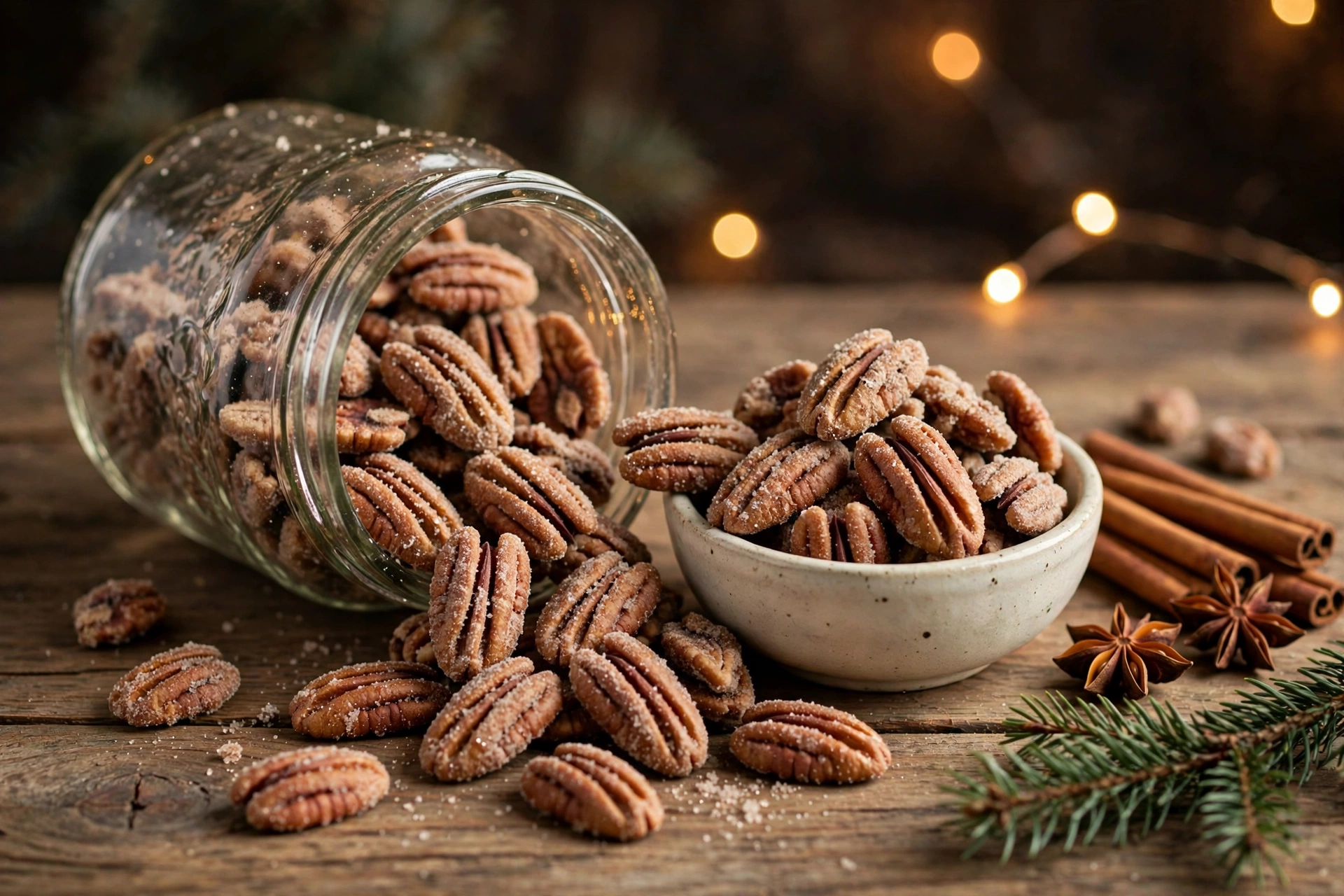
The texture is the hook. Each nut wears a thin, matte shell that cracks cleanly, then gives way to the buttery, almost creamy center of a well toasted pecan. No sticky teeth, no chewy caramel pull.
Warm Cinnamon, Deep Sugar, One Clean Snap
Cinnamon leads, but it does not shout. One teaspoon across three cups of nuts reads as warmth rather than spice, the way it does in a good snickerdoodle, present in every bite without numbing anything.
Brown sugar brings molasses depth that white sugar alone cannot. It rounds the cinnamon and gives the coat its amber color, more roasted and less candy sweet.
Salt is small and non negotiable. A quarter teaspoon in the syrup keeps the sweetness in balance, and a pinch of flaky salt at the end lands in bright little sparks on the surface.
Vanilla goes in off the heat, where its perfume survives. Added to a boiling syrup it flashes off and leaves little behind; stirred through at the end, it threads the whole batch with a soft bakery aroma.
The pecan itself stays the main event. A proper toast gives it a deep, almost savory richness that carries the sweet coat instead of drowning under it.
Eaten warm, the nuts are fragrant and tender. Eaten cooled, they turn glassy and crisp. Both states have their loyalists, and the ten minute cooling window lets you sample the argument.
They pair the way good snacks should, widely and without fuss. Beside a cup of coffee they read as dessert; beside a wedge of sharp cheddar they read as a cheese board upgrade. The cinnamon bridges both directions without complaint.
Read the Sugar: From Glossy Syrup to Sandy Coat
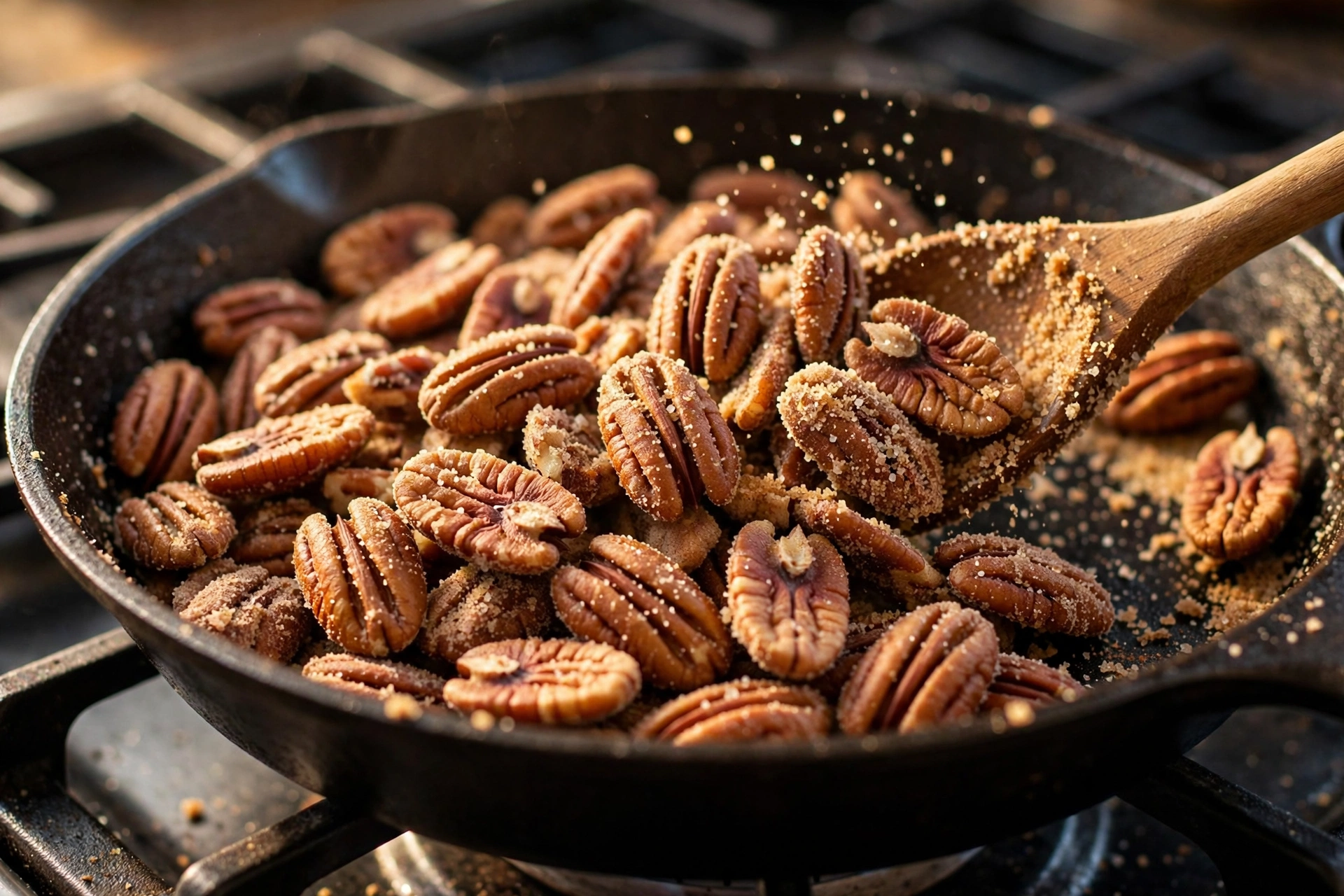
Everything in this recipe hinges on one transformation, so it deserves its own moment. Melted sugar and water form a clear, glossy syrup. As the water cooks off and the pecans stir through it, the syrup thickens and starts to look sticky and shiny.
Keep stirring. Somewhere in the third or fourth minute, the shine suddenly dies. The coat turns pale, dry looking, and granular, like damp sand clinging to each nut. That matte moment is crystallization, and it is your finish line.
Pull the pan off the heat right there. Thirty extra seconds of cooking re melts the crystals into caramel, which tastes fine but sets hard and sticky instead of crisp and sandy.
Stopping early is the opposite failure. Syrup that still looks glossy when the nuts leave the pan never sets at all, and the batch stays tacky no matter how long it cools. When in doubt, stir twenty seconds longer and watch for the shine to go.
The spoon tells the story too. Glossy syrup sheets off it in ribbons. Ready syrup leaves a grainy film, and the pan bottom shows dry sugar tracks where the spoon passes.
Pan choice helps your eyes. A light colored or stainless skillet shows the color shift clearly, while a black pan hides the exact moment the shine dies. If black is what you own, lift the spoon often and judge by the grainy film instead.
Why Two Sugars Beat One
Granulated sugar is the crystallizer. It gives up its structure willingly, then resets into the fine, crisp grain that makes the coat shatter instead of stick.
Brown sugar is the flavor act. Its molasses content deepens the taste and the color, but on its own it holds moisture and can set soft, especially on a humid day.
The blend splits the jobs. White sugar guarantees the snap, brown sugar guarantees the taste, and neither has to do both. The two to one ratio in the recipe is the balance that survived every test batch.
Coconut sugar can stand in for the brown sugar if that is what the pantry holds, with a slightly darker, more caramel result. Powdered sugar, however, will not work here; its starch turns the coat pasty.
The water matters as much as the sugars. Two tablespoons looks like nothing in the pan, but it is exactly enough to dissolve both sugars into a syrup that flows around every ridge of the nut. More water only stretches the cooking and delays the sandy turn.
Ingredients for Cinnamon Sugar Pecans
Seven pantry items, each with a job. Buy raw pecan halves, not pieces, so the coat has broad surfaces to cling to and the finished nuts look like gifts instead of granola.
- 3 cups (300 g) raw pecan halves
- 1/2 cup (100 g) granulated sugar
- 1/4 cup (50 g) packed light brown sugar
- 2 tablespoons water
- 1 teaspoon ground cinnamon
- 1/4 teaspoon fine sea salt
- 1 teaspoon pure vanilla extract
- Pinch of cayenne pepper, optional
- Flaky sea salt, for finishing
Toast, Bubble, Turn Sandy: The Stovetop Sequence
Have the parchment lined sheet ready before the stove lights. Once the sugar turns, everything moves in seconds, and there is no pause button on crystallization.
- Line a rimmed baking sheet with parchment. Add the pecans to a large dry skillet over medium heat and toast, stirring often, for 3 to 4 minutes until fragrant and a shade darker. Tip them into a bowl.
- In the same skillet, combine the granulated sugar, brown sugar, water, cinnamon and fine salt. Stir over medium heat until the sugars dissolve and the syrup bubbles across the surface, about 1 minute.
- Return the warm pecans to the skillet. Stir constantly with a wooden spoon for 3 to 4 minutes, until the syrup thickens, turns matte and sandy, and coats every nut in a pale, grainy layer.
- Take the pan off the heat. Add the vanilla and the cayenne if using, and stir for 15 seconds as the vanilla steams and perfumes the batch.
- Scrape the nuts onto the parchment in a single layer. Separate any clusters quickly with two forks and shower over a pinch of flaky salt.
- Cool for 10 minutes without touching them. The coat sets hard as it cools. Break apart any remaining clusters and serve or jar.
The Three Ways Candied Pecans Go Soft
Soft nuts are the number one complaint with stovetop candying, and the cause is almost always the clock. The syrup left the heat while it was still glossy, so the coat never crystallized and never stood a chance.
The second failure is impatience at the other end. Pecans stirred, handled, or jarred while warm trap steam against the coat and soften it from the outside. The ten minute rest is an ingredient, not a suggestion.
The third is humidity. A rainy day kitchen can keep the coat tacky for an extra few minutes, so give the batch fifteen to cool and store it with a tight lid the moment it is crisp.
Rescue exists if you catch a soft batch early. Return the nuts to a dry skillet over low heat, stir until the coat turns sandy again, about a minute, and cool them a second time on fresh parchment.
Heat discipline prevents a different heartbreak: scorched sugar. Medium heat is the ceiling. If the syrup smells bitter or turns dark amber before the pecans go in, start the syrup over. Burnt sugar cannot be seasoned back into kindness.
Vanilla Salt, a Cayenne Whisper, and a Maple Swap
The cayenne in the ingredient list is a whisper, not a kick: enough to make people ask what that warmth is. For a true sweet heat batch, raise it to a quarter teaspoon and add the flaky salt generously.
A maple swap trades the brown sugar for an equal measure of maple sugar when you can find it, landing somewhere between candy shop and sugar shack. The crystallization behaves the same; the flavor turns woodsy.
Other nuts follow the same script. Walnuts take the coat beautifully and finish a touch more bitter, in a good way. Almonds need one extra minute of stirring because their smooth skins hold less syrup at first.
For serving, the range is half the fun. Scatter the nuts over candied sweet potatoes at Thanksgiving, chop them onto salads, or set them beside the reindeer chow for a sweet and salty pair.
A pumpkin spice turn swaps the cinnamon for pumpkin pie spice and suits October baking trays. A cocoa turn adds a teaspoon of cocoa powder with the cinnamon and tastes like the inside of a truffle shop.
Jars, Double Batches, and the Gift Math
Cinnamon sugar pecans might be the most giftable thing on this site. They keep for weeks, travel without refrigeration, and look like a specialty shop purchase in a plain glass jar with a ribbon.
One batch fills about three half pint jars. A double batch fills six, but make it in two skillet rounds rather than one crowded pan; the sugar needs room to crystallize evenly, and a deep pile steams instead.
They sit happily in the same gift basket as our gingerbread crinkle cookies and a pouch of no bake gingerbread truffles, three textures that make the whole set feel planned.
For a full spread of make ahead treats to round out the gifting, browse the best Christmas Eve finger food ideas, which pairs the sweet jars with the savory bites a party table actually needs.
Label the jars with the date. The nuts keep a month at room temperature, and a dated jar saves the recipient the guesswork and saves you the January phone call.
For smaller gestures, cellophane bags tied with twine hold about a cup each and travel well in a coat pocket or a lunch bag. Teachers, mail carriers, and doormen have all confirmed, through reliable channels, that a bag of these improves a December day.
A Month of Crunch, If They Last That Long
Cool completely, then store in an airtight container at room temperature for up to a month. The coat is stable as long as air and moisture stay out, so a jar with a real seal beats a decorative tin with a loose lid.
For longer keeping, freeze for up to three months. Thaw the sealed container at room temperature before opening, so condensation forms on the jar instead of on the nuts.
Pecans bring more to the jar than crunch: healthy fats, a little fiber, and minerals like manganese. The USDA FoodData Central database lists the full breakdown for raw pecans if you like the numbers.
If a stored batch loses a step of crispness, five minutes in a low oven on a parchment lined sheet brings the coat back. Cool before jarring again.
One more serving trick from the test kitchen notebook: scatter a warm handful over vanilla ice cream within a minute of plating. The coat stays crisp against the cold cream, and the cinnamon melts into something close to sauce at the edges.
The Bowl That Empties Itself
Cinnamon sugar pecans ask for one skillet, seven pantry staples, and twenty honest minutes, and they return the most versatile treat of the season. Watch for the sandy turn, cool without touching, and the crunch takes care of itself.
Make a batch for the house and a batch for the jars, because the first one will not survive the weekend. Some recipes earn their place by being complicated. This one earns it by being gone.
Happy candying, and hide a small jar for yourself. Hanna
FAQ
Why are my cinnamon sugar pecans soft instead of crisp?
The syrup almost certainly left the heat too early, while it was still glossy. The coat must turn matte and sandy in the pan for it to set crisp. Return the batch to a dry skillet over low heat, stir about 1 minute until the shine dies, then cool again on fresh parchment.
How do I keep candied pecans from sticking together?
Speed at the sheet pan is the fix. Scrape the nuts out the second the pan leaves the heat, spread them in a single layer, and separate clusters with two forks before the coat sets. Once fully cool and crisp, they break apart cleanly and stay separate in the jar.
Can I make cinnamon sugar pecans without brown sugar?
Yes, use all granulated sugar and add an extra pinch of cinnamon. The crystallization is actually a little crisper. What you lose is the molasses depth and amber color, so the flavor reads simpler and sweeter. A drop of molasses in the syrup restores most of it.
Do I have to toast the pecans first?
It is strongly recommended. Three to four dry minutes in the skillet deepens the nutty flavor and drives off surface moisture, so the syrup coats instead of steaming. Skipping the toast gives paler flavor and a slightly softer center under the crisp shell.
How long do cinnamon sugar pecans keep, and can I freeze them?
Stored airtight at room temperature, they keep their crunch for up to a month. For longer storage, freeze up to 3 months and thaw the sealed container at room temperature before opening, so moisture condenses on the jar rather than on the nuts.
Cinnamon Sugar Pecans
Cinnamon sugar pecans on the stovetop in 20 minutes: toasted pecans stirred through a two sugar cinnamon syrup until the coat turns matte and sandy, finished with vanilla and flaky salt off the heat, then cooled into a shattering crunch. Total time includes 10 minutes of cooling.
- Total Time: 20 minutes
- Yield: 12 servings 1x
Ingredients
- 3 cups (300 g) raw pecan halves
- 1/2 cup (100 g) granulated sugar
- 1/4 cup (50 g) packed light brown sugar
- 2 tablespoons water
- 1 teaspoon ground cinnamon
- 1/4 teaspoon fine sea salt
- 1 teaspoon pure vanilla extract
- Pinch of cayenne pepper, optional
- Flaky sea salt, for finishing
Instructions
- Line a rimmed baking sheet with parchment. Add the pecans to a large dry skillet over medium heat and toast, stirring often, for 3 to 4 minutes until fragrant and a shade darker. Tip them into a bowl.
- In the same skillet, combine the granulated sugar, brown sugar, water, cinnamon and fine salt. Stir over medium heat until the sugars dissolve and the syrup bubbles across the surface, about 1 minute.
- Return the warm pecans to the skillet. Stir constantly with a wooden spoon for 3 to 4 minutes, until the syrup thickens, turns matte and sandy, and coats every nut in a pale, grainy layer.
- Take the pan off the heat. Add the vanilla and the cayenne if using, and stir for 15 seconds as the vanilla steams and perfumes the batch.
- Scrape the nuts onto the parchment in a single layer. Separate any clusters quickly with two forks and shower over a pinch of flaky salt.
- Cool for 10 minutes without touching them. The coat sets hard as it cools. Break apart any remaining clusters and serve or jar.
- Prep Time: 5 minutes
- Cook Time: 9 minutes