
In this article:
Why You Will Love These Thanksgiving Dinner Rolls
25-Minute Thanksgiving Dinner Rolls bring bakery-soft, golden rolls to your holiday table faster than any classic recipe you have ever tried. The secret is rapid-rise yeast paired with warm milk, a combination that wakes the dough in minutes and skips the long proofing every traditional recipe demands.
Each roll bakes up tall and pillowy, with a tender buttery crumb that pulls apart in soft strands and a glossy butter-brushed top. They taste like the nostalgic rolls from childhood Thanksgivings, but you can make them on a busy weeknight with zero planning.
You only need one bowl, one pan, and pantry staples you already own, so there is no special equipment and no stressful grocery run. Kids genuinely love rolling the dough into balls, which turns a hectic holiday morning into a fun family moment instead of another chore.
Thanksgiving is the one feast where warm, homemade bread matters most, and these rolls prove that from-scratch flavor does not require an entire afternoon. Pull them from the oven, brush them with butter, and watch them disappear before the turkey is even carved.
Twenty-five minutes from bowl to bread basket: that is the whole promise of these rolls, and it holds true even for first-time bakers. If you can stir, knead for a few minutes, and set a timer, you can absolutely master this recipe on your very first attempt.
Taste and Texture Profile
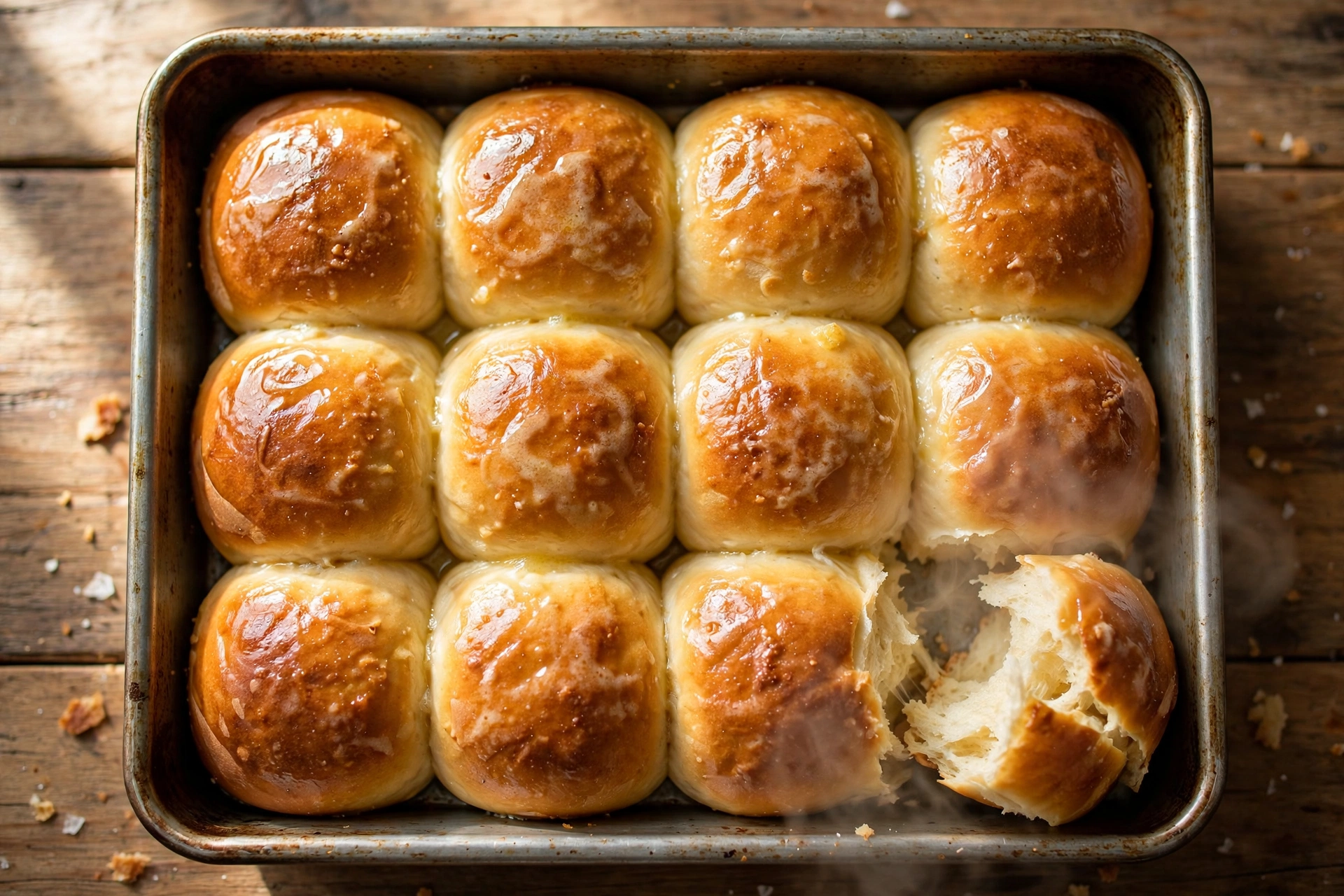
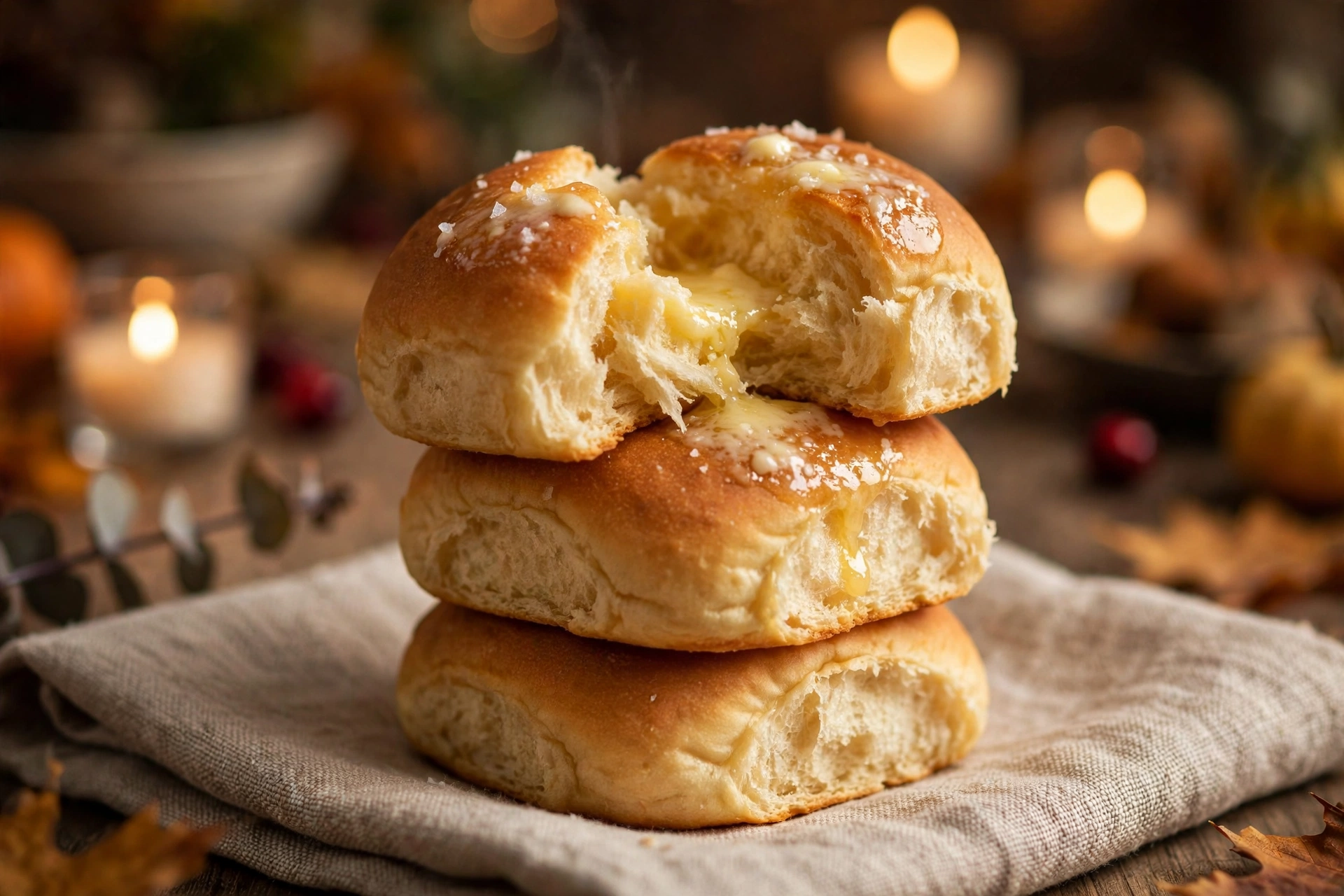
Bite into one of these rolls and the first thing you notice is the crust: thin, delicately golden, and just firm enough to yield to gentle pressure. Underneath, the crumb opens into an airy network of tiny holes, the structure only a well-hydrated dough and a hot oven can create.
The flavor is rich and buttery without feeling heavy, thanks to melted butter folded into the dough and brushed over the tops the second they leave the oven. A touch of sugar feeds the yeast and leaves a whisper of sweetness, so the rolls taste complete on their own.
Warm milk gives the crumb a subtle milky softness that water-based rolls simply cannot match, while the egg adds color, structure, and a faint custardy richness. Every bite finishes clean, with a gentle salt balance that keeps you reaching for another roll instead of feeling weighed down.
These rolls were practically born to mop up gravy, catch drips of cranberry sauce, and cradle leftover turkey the next day. They pair beautifully with creamy holiday sides too, like a 30-minute green bean casserole or maple pecan mashed sweet potatoes, because their mild buttery flavor never fights the rest of the plate.
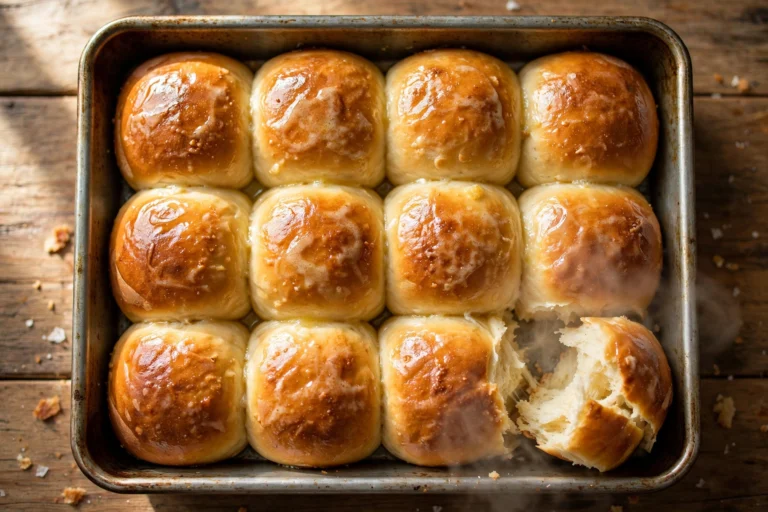
Visually, a pan of twelve touching rolls is pure holiday theater: domed tops, deep golden shoulders, and pale soft sides where each roll hugged its neighbor. Serve them straight from the pan on a folded linen napkin and the table instantly looks like a magazine spread.
Temperature matters more than most bakers realize, so serve these rolls warm whenever you can manage it. At room temperature they are still delicious, but reheated for five minutes they return to that just-baked softness that makes everyone at the table go quiet for a moment.
Quick and Easy Preparation
The entire recipe runs on one clever trick: rapid-rise yeast, warm milk at about 120°F, and a single short rest while your oven preheats to 400°F. No hour-long first rise, no second proofing: a genuine yeast roll in twenty-five minutes.
Here is how it slots into a real Thanksgiving day: slide your turkey in to roast, and start these rolls about forty minutes before dinner. While the dough rests five minutes, your oven climbs to temperature, and the rolls bake in thirteen to fifteen minutes flat.
By the time you pull the turkey out to rest, the rolls go in, and both land on the table at the perfect moment. You can even bake them alongside a 20-minute cornbread sausage stuffing if your oven has the space, since both love the same hot oven.
Kneading takes only four to five minutes by hand, just until the dough turns smooth and springs back when poked. Shaping is equally simple: pinch off twelve pieces, tuck each into a ball, and nestle them into a buttered 9×13-inch pan.
Cleanup is mercifully small, with one mixing bowl, one wooden spoon, and the baking pan to wash. On the most chaotic cooking day of the year, a recipe this fast and this tidy earns its place on the menu.
Lighter and Diet Adaptations
If you want a lighter roll, swap the whole milk for 2% milk and cut the sugar from a quarter cup to three tablespoons. The rolls will still rise beautifully and taste buttery, just with a slightly less rich crumb and a paler golden color.
A dairy-free version works well: use unsweetened oat milk warmed to 120°F and replace the butter with a neutral oil or plant-based butter stick. Brush the tops with melted plant butter after baking for that glossy finish, and nobody will guess the difference.
For a heartier, half whole wheat version, replace one cup of the all-purpose flour with white whole wheat flour and add an extra tablespoon of warm milk. The rolls turn a touch denser and nuttier, which actually pairs wonderfully with savory Thanksgiving gravy.
Egg-free bakers can skip the egg entirely and add two extra tablespoons of warm milk to keep the dough hydrated. The rolls will be a little paler and slightly less rich, but the texture stays soft and the 25-minute timing does not change at all.
Ingredients
- 1 cup whole milk, warmed to 110-120°F
- 2 1/4 teaspoons rapid-rise (instant) yeast, 1 standard packet
- 1/4 cup granulated sugar
- 1/4 cup unsalted butter, melted, plus 2 tablespoons more for brushing
- 1 large egg, at room temperature
- 1 teaspoon fine sea salt
- 3 to 3 1/2 cups all-purpose flour, spooned and leveled
- 1 teaspoon neutral oil or softened butter, for greasing the pan
- Flaky sea salt, optional, for sprinkling on top
Step by Step Instructions
- Position a rack in the center of the oven and preheat to 400°F. Lightly grease a 9×13-inch baking pan with the neutral oil or softened butter, making sure to coat the corners where rolls love to stick.
- Pour the warm milk into a large mixing bowl and sprinkle the rapid-rise yeast and sugar over the top. Stir once with a wooden spoon and let it sit for 2 to 3 minutes, just until the surface looks slightly foamy and smells pleasantly yeasty.
- Whisk in the melted quarter cup of butter, the room-temperature egg, and the fine sea salt until the mixture looks smooth and pale yellow. The egg must not be cold from the fridge, or it will cool the milk and slow the yeast down.
- Add 3 cups of flour all at once and stir with the wooden spoon until a shaggy dough forms and no dry pockets remain. If the dough feels wet and sticks to your fingers like paste, add flour two tablespoons at a time until it turns soft and tacky but manageable.
- Turn the dough onto a lightly floured counter and knead for 4 to 5 minutes, folding and pressing until it feels smooth, elastic, and springs back when poked. Resist adding too much extra flour: a slightly tacky dough bakes into a softer roll.
- Shape the dough into a ball, cover it with a clean kitchen towel, and let it rest for 5 to 8 minutes while the oven finishes preheating. This short rest relaxes the gluten and gives the rapid-rise yeast a head start, which is the entire secret of the 25-minute timing.
- Divide the dough into 12 equal pieces, about 2 ounces each if you own a kitchen scale. Roll each piece into a smooth ball by tucking the edges underneath and rolling it under a cupped hand on the counter.
- Arrange the balls in the prepared pan in a 3 by 4 grid, leaving a small gap between them so they have room to puff. Cover loosely with the towel and let them sit for 3 to 4 minutes while you melt the remaining 2 tablespoons of butter.
- Bake for 13 to 15 minutes, until the tops are deeply golden brown and an instant-read thermometer inserted into the center roll reads 190°F. Immediately brush the hot rolls with the melted butter and sprinkle with flaky sea salt if you like, then serve warm.
Pro Tips for Perfect Thanksgiving Dinner Rolls
Milk temperature is the single biggest lever in this recipe, so aim for 110 to 120°F, warm like a comfortable bath. Cooler milk slows the yeast and stretches your timeline, while milk hotter than 130°F can kill it outright and leave you with dense, sad rolls.
If your dough feels sticky after kneading, dust your hands with flour instead of dumping more into the bowl. Extra flour is the classic reason homemade rolls turn heavy, because each additional scoop tightens the crumb and dries out the interior.
Pale tops are the most common complaint with quick rolls, and the fix is simple: fully preheat your oven and bake on the center rack. A hot oven drives fast browning through the Maillard reaction, and the final butter brush adds color and shine.
For guaranteed doneness without guessing, check the center roll with an instant-read thermometer and look for 190°F. The USDA safe temperature chart is the reference most American kitchens trust for internal temperatures, and 190°F is the sweet spot where roll crumb sets fully without drying.
These thanksgiving dinner rolls rise best in a warm kitchen, so if your house runs cool in November, rest the covered dough near the preheating oven. Even a few degrees of ambient warmth noticeably speeds the yeast during that short five-minute rest.
Feeding a crowd? This recipe doubles cleanly into two 9×13-inch pans with no change to the method, just knead the larger dough ball one extra minute. Both pans can bake side by side, or bake in two quick batches since each round takes only fifteen minutes.
Easy Swaps and Tasty Variations
Honey butter rolls are the easiest upgrade: replace the granulated sugar with 3 tablespoons of honey and brush the baked rolls with butter whisked with an extra teaspoon of honey. The result tastes like a steakhouse bread basket and disappears even faster than the classic version.
For garlic herb rolls, stir one minced garlic clove and a teaspoon of chopped fresh rosemary into the melted butter before brushing. The savory aroma fills the kitchen and turns the rolls into the perfect partner for turkey and gravy.
Everything-style rolls need only an egg wash: beat one egg with a tablespoon of water, brush the shaped rolls before baking, and sprinkle with sesame seeds, poppy seeds, and flaky salt. They look bakery-professional and add a pleasant crunch to each bite.
Day-after Thanksgiving, split leftover rolls and pile them with sliced turkey, cranberry sauce, and a smear of mayo for instant mini sandwiches. They also make an excellent base for breakfast the next morning, warmed and filled like tiny turkey cranberry sliders with a fried egg.
Sweet cinnamon morning rolls use the same dough with a different finish: after shaping, dip each ball in melted butter, then roll in cinnamon sugar before placing in the pan. They bake into sticky, fragrant breakfast rolls that taste like a shortcut cinnamon bun.
How to Store and Make Ahead
Baked rolls keep beautifully at room temperature for up to 2 days when stored in an airtight container or zip-top bag. Let them cool completely before sealing, because trapped steam is what turns a soft crust gummy overnight.
To freeze, cool the rolls fully, wrap the pan tightly in a double layer of foil, or bag individual rolls and freeze for up to 2 months. Reheat frozen rolls wrapped in foil at 325°F for 12 to 15 minutes, and they taste remarkably close to fresh-baked.
For the make-ahead play, bake the rolls fully Wednesday, freeze them, and reheat Thanksgiving morning while the turkey rests. Plan on two to three rolls per guest, since these disappear faster than any other bread on the table.
Leftover dough is not ideal here, since rapid-rise yeast is calibrated for speed rather than a slow overnight ferment. If you must pause, shape the rolls, refrigerate the covered pan up to 8 hours, then bake straight from cold, adding 2 to 3 minutes.
Conclusion
25-Minute Thanksgiving Dinner Rolls prove that homemade bread and a packed holiday schedule are not mutually exclusive. Warm milk, rapid-rise yeast, and a hot oven do all the heavy lifting while you focus on the turkey and the guests.
Make them once and they will earn a permanent spot in your Thanksgiving lineup, the kind of recipe friends ask for before they finish chewing. From my kitchen to yours: preheat that oven, warm the milk, and enjoy the moment when the whole table reaches for the bread basket at once.
FAQ
Can I really make yeast thanksgiving dinner rolls in only 25 minutes?
Yes. Rapid-rise yeast works fast in warm dough, and the single short rest happens while the oven preheats. The hot 400°F oven gives strong oven spring, so these thanksgiving dinner rolls puff tall with no long proof: 10 minutes hands-on plus 13 to 15 minutes baking.
Why does this recipe call for rapid-rise yeast instead of active dry yeast?
Rapid-rise yeast dissolves into the dough and ferments faster, which makes the 25-minute schedule possible. Active dry yeast must be proofed first and rises more slowly, pushing the recipe past 40 minutes. With active dry only, proof it in the warm milk with sugar for 5 minutes, then rest 10 minutes longer.
Can I bake these rolls in a muffin tin instead of a 9×13 pan?
Yes. A standard 12-cup muffin tin works and gives each roll a slightly crustier edge. Grease the cups well, place one dough ball per cup, and start checking at 11 minutes. The pan version stays softer on the sides, so pick the texture you prefer.
Why did my quick rolls turn out dense instead of fluffy?
Too much flour is the usual culprit: a stiff dough cannot expand, while a soft, slightly tacky dough bakes into an open crumb. Milk that was too cool is the second suspect, since sluggish yeast never generates enough gas quickly.
Can I shape the rolls the night before and bake them Thanksgiving morning?
Yes, with one adjustment: shape the rolls, cover the pan tightly, and refrigerate up to 8 hours. Bake straight from cold, adding 2 to 3 minutes. For the softest texture, though, the same-day 25-minute method still wins.
25-Minute Thanksgiving Dinner Rolls
Soft, golden, buttery yeast rolls made start to finish in 25 minutes with rapid-rise yeast, warm milk, and a single short rest. Tall, pillowy, and brushed with melted butter, they are the perfect Thanksgiving bread basket with zero long proofing.
- Total Time: 25 minutes
- Yield: 12 rolls 1x
Ingredients
- 1 cup whole milk, warmed to 110-120°F
- 2 1/4 teaspoons rapid-rise (instant) yeast (1 packet)
- 1/4 cup granulated sugar
- 1/4 cup unsalted butter, melted, plus 2 tablespoons more for brushing
- 1 large egg, at room temperature
- 1 teaspoon fine sea salt
- 3 to 3 1/2 cups all-purpose flour, spooned and leveled
- 1 teaspoon neutral oil or softened butter, for greasing the pan
- Flaky sea salt, optional, for sprinkling
Instructions
- Preheat the oven to 400°F and grease a 9×13-inch baking pan.
- Stir the warm milk, rapid-rise yeast, and sugar together and rest 2-3 minutes until slightly foamy.
- Whisk in the melted butter, room-temperature egg, and fine sea salt until smooth.
- Add 3 cups of flour and stir until a shaggy dough forms, adding more flour 2 tablespoons at a time if too wet.
- Knead on a lightly floured counter for 4-5 minutes until smooth and elastic.
- Cover and rest the dough 5-8 minutes while the oven finishes preheating.
- Divide into 12 equal pieces and roll each into a smooth ball.
- Arrange in the pan in a 3×4 grid, cover loosely, and rest 3-4 minutes while melting the remaining butter.
- Bake 13-15 minutes until deeply golden and 190°F in the center roll, then brush immediately with melted butter and serve warm.
- Prep Time: 10 minutes
- Cook Time: 15 minutes