
In this article:
What Makes This Cornbread Sausage Stuffing Special
20-Minute Cornbread Sausage Stuffing works because it breaks the one rule every other recipe obeys. It never touches the oven. The entire dish happens in a single large skillet on the stovetop, which means your oven stays completely free for the turkey.
That alone makes it worth learning. On the biggest cooking day of the year, oven real estate is more precious than counter space.
The texture comes from a two stage skillet method. First the cornbread cubes toast in a dry pan until their edges turn golden and crisp, which builds the crunchy top layer most people fight over without any baking at all.
Then the sausage browns hard in the same pan. Its rendered fat becomes the cooking medium for the onion and celery, layering savory flavor at every step instead of just at the end.
The moisture control is where stovetop stuffing actually beats the baked kind. You add warm broth gradually and watch the cornbread drink it in real time, stopping exactly when it looks right.
No guessing at ratios and hoping for the best after 40 minutes in the oven. A lid goes on for the final five minutes, and the trapped steam finishes the job, setting the beaten egg binder and melding everything into a cohesive, spoonable stuffing with crisped edges.
Dried cranberries and toasted pecans are not garnish here, they are structural. The cranberries burst with tart sweetness against the salty sausage.
The pecans keep their crunch because they go in at the very end, giving you the sweet salty crunchy soft contrast that makes stuffing the dish people remember. Twenty minutes, one pan, zero oven, and a stuffing that eats like it took all afternoon.
Thanksgiving Sides Without the Oven Traffic Jam
20-Minute Cornbread Sausage Stuffing is the answer to the question every Thanksgiving cook asks at noon on Thursday, where am I supposed to put this. The turkey owns the oven, the rolls need the oven, the casserole needs the oven, and something has to give.
This stuffing gives nothing, because it never asked for the oven in the first place. That single fact will lower your blood pressure more than any recipe tip ever could.
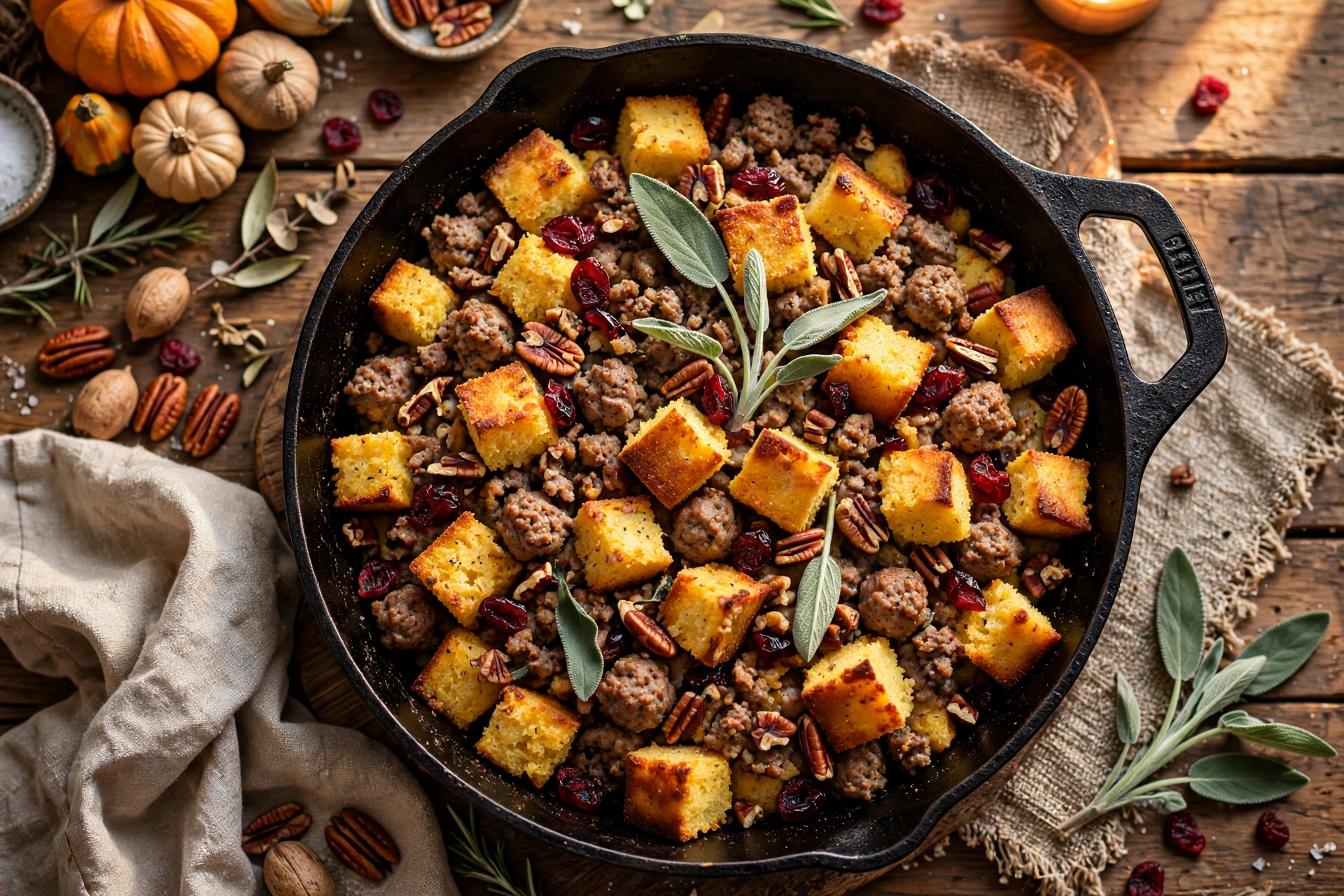
Picture the scene: a wide skillet on the back burner, golden cornbread cubes glistening with sausage drippings, cranberries like rubies scattered through, sage perfuming the whole kitchen. It looks like the stuffing from the magazine spread, rustic and abundant.
It tastes even better because every cube got personal attention in the pan. The mood is calm competence, the rarest Thanksgiving feeling of all, you standing at the stove with a wooden spoon while everything else takes care of itself.
Serve it in the skillet or piled into a warm bowl, either way it disappears fast. This is the side dish that frees you to actually enjoy the holiday you are cooking, and once you have made stuffing without the oven, you will wonder why anyone ever did it differently.
20-Minute Cornbread Sausage Stuffing
A 20-minute stovetop cornbread sausage stuffing made entirely in one skillet. Toasted cornbread cubes, browned sausage, tart cranberries and crunchy pecans, with zero oven time.
- Total Time: 20 minutes
- Yield: 8 servings 1x
Ingredients
- 1 lb bulk pork breakfast sausage
- 6 cups day old cornbread, cut into 1 inch cubes (about 1 lb)
- 2 tablespoons butter
- 1 large yellow onion, diced
- 3 ribs celery, diced
- 2 cloves garlic, minced
- 1 tablespoon fresh sage, chopped (or 1 teaspoon dried)
- 1 teaspoon fresh thyme leaves
- 2 1/2 cups low sodium chicken broth, warmed
- 2 large eggs, beaten
- 1/2 cup dried cranberries
- 1/2 cup pecans, toasted and roughly chopped
- 1 teaspoon kosher salt, plus more to taste
- 1/2 teaspoon black pepper
Instructions
- Place the cornbread cubes in a large dry skillet, 12 inches or bigger, over medium heat. Toast 4 to 5 minutes, tossing often, until the edges turn golden and crisp. Transfer to a large bowl and set aside.
- Crumble the sausage into the same skillet over medium high heat. Cook 5 minutes, breaking it into small pieces, until browned and crisp at the edges. Scoop out with a slotted spoon and add to the bowl with the cornbread, leaving the drippings in the pan.
- Add the butter to the drippings. Add the onion and celery with a pinch of salt and cook 4 minutes, stirring, until softened and just starting to color. Stir in the garlic, sage and thyme and cook 1 minute more, until fragrant.
- Pour in the warmed broth and bring to a lively simmer, scraping up all the browned bits from the bottom of the pan.
- Return the cornbread and sausage to the skillet. Add the cranberries and toss everything gently until the cubes have absorbed most of the broth, about 2 minutes. If it looks dry, splash in more broth a quarter cup at a time.
- Drizzle the beaten eggs evenly over the mixture and fold through gently.
- Cover the skillet, reduce the heat to low, and steam 5 minutes until the stuffing is hot through and holds together when pressed with a spoon.
- Uncover, scatter the toasted pecans over the top, and rest 3 minutes off the heat. Taste for salt, adjust, and serve hot straight from the skillet.
- Prep Time: 10 minutes
- Cook Time: 10 minutes
Flavor Notes and Texture Contrast
The first forkful is a study in contrast, which is exactly what great stuffing should be. The toasted cornbread edges shatter lightly, giving way to centers that have gone soft and custardy from the broth.
That dual texture in a single cube is something oven stuffing rarely achieves. Cornbread brings its own gentle sweetness to the party, a honeyed grain flavor that white bread stuffing simply does not have.
The sausage is the savory backbone, browned until the crumbles are crisp and deeply caramelized, salty with sage running through every bite. Onion and celery melt into sweetness in the drippings, losing their raw edge and becoming the aromatic foundation that makes the whole skillet smell like Thanksgiving.
Fresh sage and thyme go in at the end of the saute so their oils bloom in the heat without turning bitter. That herbal perfume is the difference between good stuffing and unforgettable stuffing.
Then the bright notes arrive. Dried cranberries plump slightly in the steam and pop with tartness, cutting the richness of the sausage fat the way cranberry sauce cuts the turkey.
Toasted pecans add buttery crunch and a woodsy depth that plays beautifully against the sweet corn flavor. The beaten egg stirred through at the end is invisible but essential, binding the cubes into a cohesive dish that spoons cleanly instead of scattering, especially important for a stuffing that never sees the inside of an oven.
Why It Fits Your Schedule
The twenty minute timeline is honest because nothing here waits on anything else. The cornbread toasts while you dice the vegetables, the sausage browns while the broth heats.
The covered steam finish happens while you carve the turkey or mash the potatoes. Ten minutes of prep, ten minutes of cooking, and the stuffing is done whenever you are ready for it, because it holds beautifully.
One large skillet is the entire equipment list, plus a lid and a wooden spoon, which means you are not washing a baking dish on the busiest dish day of the year. The ingredients are all Thanksgiving staples, sausage, cornbread, broth, the aromatics you already bought for everything else. There is no special shopping trip. Nothing exotic to track down.
Timing flexibility is the hidden superpower. Unlike oven stuffing, which has to come out when the timer says so, this cornbread sausage stuffing waits politely on low heat or reheats in minutes.
Make it while the turkey rests, that sacred thirty minute window, and it hits the table steaming at exactly the right moment. Pair it with your 25-Minute Turkey Cranberry Sliders for a Friendsgiving spread. Alongside 25-Minute Maple Pecan Mashed Sweet Potatoes for the full classic plate.
Diet Conscious Twists
Skipping the pork is easy and the method does not care what sausage you use. Turkey or chicken sausage browns just as well, though you should add a tablespoon of butter since leaner sausage renders less fat for the vegetables. Smoked turkey sausage, sliced into coins, gives a wonderful campfire note that pairs beautifully with the sweet cornbread.
For gluten free guests, use a certified gluten free cornbread, either homemade from a gluten free mix or a store bought loaf. The rest of the recipe is naturally compliant.
Check your broth label too, because some brands hide wheat, and use a gluten free sausage. The toasting step is even more important here, since gluten free cornbread can be crumblier, and those crisped edges hold everything together.
Ingredients
- 1 lb bulk pork breakfast sausage
- 6 cups day old cornbread, cut into 1 inch cubes (about 1 lb)
- 2 tablespoons butter
- 1 large yellow onion, diced
- 3 ribs celery, diced
- 2 cloves garlic, minced
- 1 tablespoon fresh sage, chopped (or 1 teaspoon dried)
- 1 teaspoon fresh thyme leaves
- 2 1/2 cups low sodium chicken broth, warmed
- 2 large eggs, beaten
- 1/2 cup dried cranberries
- 1/2 cup pecans, toasted and roughly chopped
- 1 teaspoon kosher salt, plus more to taste
- 1/2 teaspoon black pepper
Step by Step Instructions
- Place the cornbread cubes in a large dry skillet, 12 inches or bigger, over medium heat. Toast 4 to 5 minutes, tossing often, until the edges turn golden and crisp. Transfer to a large bowl and set aside. Do not wash the skillet.
- Crumble the sausage into the same skillet over medium high heat. Cook 5 minutes, breaking it into small pieces, until browned and crisp at the edges. Scoop out with a slotted spoon and add to the bowl with the cornbread, leaving the drippings in the pan.
- Add the butter to the drippings. Add the onion and celery with a pinch of salt and cook 4 minutes, stirring, until softened and just starting to color. Stir in the garlic, sage and thyme and cook 1 minute more, until fragrant.
- Pour in the warmed broth and bring to a lively simmer, scraping up all the browned bits from the bottom of the pan. Those bits are pure flavor, do not leave them behind.
- Return the cornbread and sausage to the skillet. Add the cranberries and toss everything gently until the cubes have absorbed most of the broth, about 2 minutes. If it looks dry, splash in more broth a quarter cup at a time.
- Drizzle the beaten eggs evenly over the mixture and fold through gently. The egg disappears into the hot stuffing and binds it as it sets.
- Cover the skillet, reduce the heat to low, and steam 5 minutes until the stuffing is hot through and holds together when pressed with a spoon.
- Uncover, scatter the toasted pecans over the top, and rest 3 minutes off the heat. Taste for salt, adjust, and serve hot straight from the skillet.
Secrets for Foolproof Cornbread Sausage Stuffing
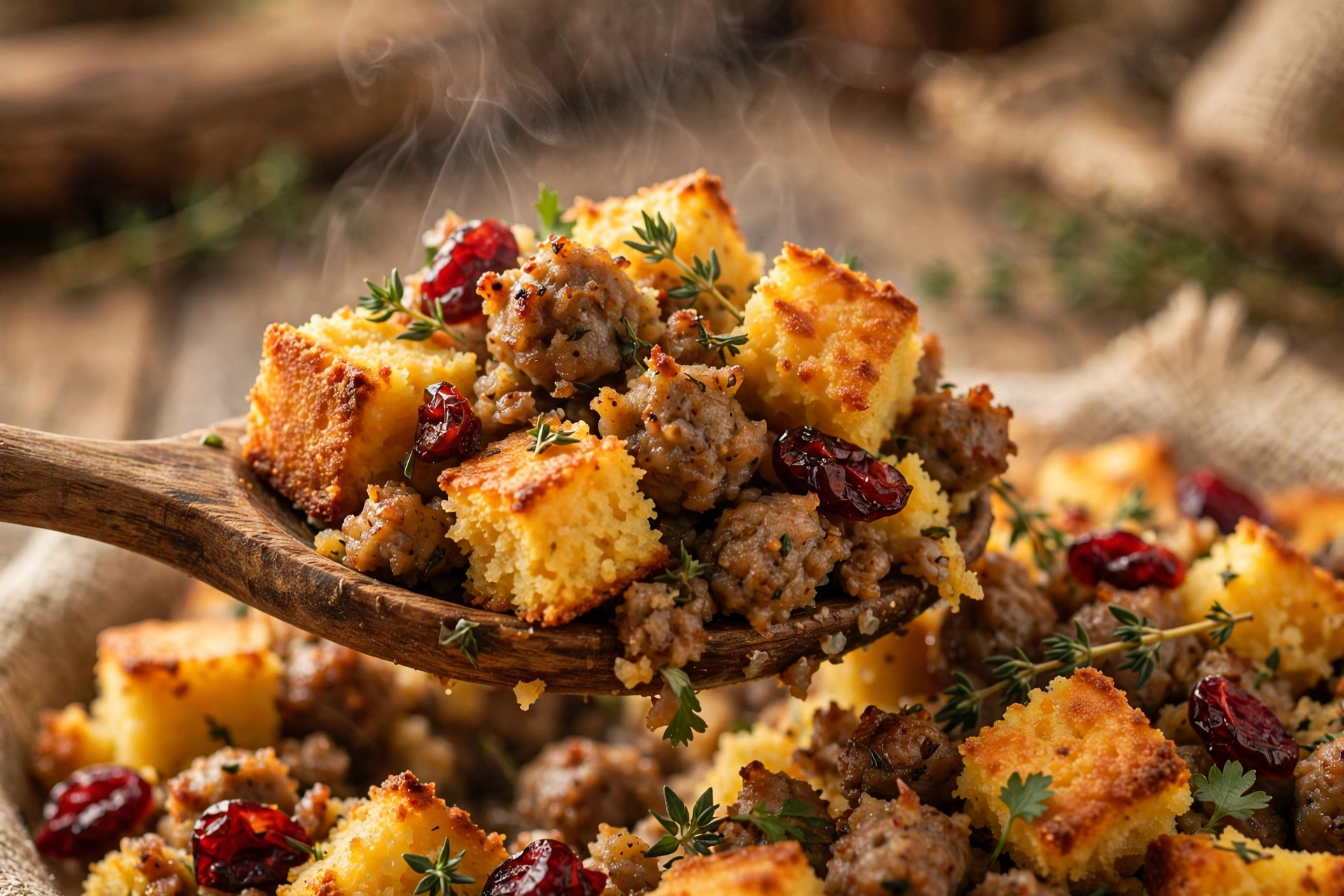
For this cornbread sausage stuffing, the cornbread is the whole game, and day old is not a suggestion. Fresh cornbread is too soft and turns to mush the moment broth hits it, while day old cubes have firmed up enough to toast properly and drink in liquid without disintegrating.
If your cornbread is fresh, cube it and dry the cubes in a 300 degree oven for 15 minutes. Simply leave them on a sheet pan on the counter for a few hours.
Broth temperature matters more than the recipe lets on. Warm broth absorbs faster and more evenly than cold, which means the cubes hydrate before they start breaking down.
Keep the broth at a bare simmer in a small saucepan while you work. Add it to the hot skillet confidently, that sizzle is the sound of the cubes sealing their toasted edges.
Resist the urge to stir once the eggs go in. One gentle fold to distribute, then hands off, because agitation breaks the cubes apart and turns stuffing into porridge. The covered steam does the binding work for you, and patience here is the difference between distinct golden cubes and a sad pan of mush.
Salt in layers, not all at once. Sausage brands vary wildly in saltiness, broth varies too, so season the vegetables lightly, then do your real salting at the end after everything has come together.
Taste a full forkful with cranberry and pecan, because the sweet and salty balance is what you are calibrating. A final pinch of flaky salt on top makes the whole skillet sing.
Variations to Try Next Time
Once you trust the skillet method, the variations are endless. An apple and walnut version swaps the cranberries for two diced tart apples added with the onion.
The fruit softens into jammy pockets that are incredible against the sausage. A Southern leaning version uses andouille instead of breakfast sausage and adds diced bell pepper with the celery for a gentle Cajun warmth.
For a wilder mushroom version, skip the sausage entirely and brown a pound of mixed mushrooms in butter until deeply golden, then proceed exactly as written with vegetable broth. The result is earthy and luxurious, and mushroom lovers at the table will fight over it.
A cornbread sausage stuffing with oysters is the classic coastal move. Add a pint of shucked oysters with their liquor in step 5 and reduce the broth by half a cup.
Keeping It Fresh: Storage Guide
Leftover cornbread sausage stuffing refrigerates well in an airtight container for up to 4 days, and they reheat wonderfully. The skillet method is your friend here too, a few minutes in a covered skillet with a splash of broth brings back the crispy edges better than any microwave can.
For single servings, the microwave works in 90 second bursts. You will lose some of the toast, but the flavor stays intact.
This cornbread sausage stuffing freezes well for up to 2 months. Portion into freezer bags, press flat, and thaw overnight in the refrigerator. Reheat covered in a 350 degree oven for 15 minutes with a splash of broth, then uncover for 5 minutes to re crisp the top. The pecans stay crunchy and the cranberries stay bright, so it tastes freshly made.
You can also prep the components ahead without fully cooking. Toast the cornbread cubes and brown the sausage up to 2 days ahead, refrigerate separately, then pick up at step 3 on Thanksgiving day. The whole dish still comes together in about 15 minutes, which means you can delegate it to anyone in the kitchen with total confidence.
Conclusion
20-Minute Cornbread Sausage Stuffing proves that the smartest Thanksgiving move is the one that ignores the oven entirely. One skillet, twenty minutes, and a stuffing with crackling toasted edges, savory sausage, tart cranberries and buttery pecans, all while the turkey roasts undisturbed. This is the side dish that gives you your holiday back.
Make it once and the method becomes yours forever, because a stuffing this good and this fast earns a permanent spot in the rotation. Serve it next to your 30-Minute Green Bean Casserole and 20-Minute Honey Butter Roasted Carrots, and watch the whole table go quiet for the first three bites.
FAQ
My cornbread is fresh, not day old. Can I still make this cornbread sausage stuffing?
Yes. Cube the fresh cornbread and spread the cubes on a sheet pan, then dry them in a 300 degree F oven for 12 to 15 minutes, tossing once. You want the cubes firm and lightly golden at the edges, not browned through. This mimics day old texture and keeps the stuffing from turning mushy.
My stuffing looks dry after adding all the broth. How do I fix it?
Add more warm broth a quarter cup at a time, tossing gently and waiting a minute between additions so the cubes can absorb it. Cornbread varies a lot in density, so the exact amount is always approximate. The finished stuffing should look moist and glistening, with no dry cubes and no puddle of broth at the bottom.
Can I make this without sausage for vegetarian guests?
Absolutely. Replace the sausage with 2 cups of diced mushrooms browned hard in 2 tablespoons of butter, plus 1 teaspoon of soy sauce for savory depth. Use vegetable broth instead of chicken broth. Everything else, including the timing, stays exactly the same.
Can I double this recipe for a crowd of 12 or more?
Yes, but use a very large skillet or a Dutch oven so the cubes toast and steam in a single layer rather than steaming in a crowd. A 14 inch skillet or 6 quart Dutch oven handles a double batch well. Add 2 to 3 extra minutes to the covered steam step and check that the center is hot before serving.
Is it safe to prepare stuffing ahead and reheat it on Thanksgiving?
Yes, with one rule, cool it quickly and refrigerate within 2 hours of cooking, then reheat to steaming hot throughout. According to food safety guidance from the USDA, stuffing should reach 165 degrees F when reheated. Never leave cooked stuffing at room temperature for longer than 2 hours, and the stovetop reheat with a splash of broth brings it back beautifully.
1 commentaire sur « 20-Minute Cornbread Sausage Stuffing »